The UK is eating double the recommended sugar limit — here's where it's actually coming from
The UK eats roughly double the recommended sugar limit. Here's what SACN's guideline actually means in teaspoons, which everyday foods are really driving the excess, and how to spot hidden sugar on a UK food label.
Britain has a sugar problem, and it isn’t hiding in the sweet aisle — it’s in the cereal bowl, the “healthy” yoghurt pot and the pasta sauce jar. The latest National Diet and Nutrition Survey (NDNS), covering 2019 to 2023, found that UK adults get around 10% of their daily energy from free sugars and children get even more — roughly double the 5% ceiling recommended by the Scientific Advisory Committee on Nutrition (SACN). So how much sugar should you eat in the UK, and where is the rest actually coming from? The honest answer is: less than you’d think, and from places you might not expect. Fewer than 1 in 5 adults and fewer than 1 in 10 children currently meet the guideline. Girls aged 11 to 18 fare worst of all, averaging 12% of their energy from free sugars. This article breaks down the real guideline in practical terms, shows exactly which foods are driving the excess, and explains how to spot sugar hiding in plain sight on a UK food label.
How much sugar should you eat a day in the UK?
The UK government’s guideline, set by SACN, is that free sugars — sugar added to food or drink, plus the sugar naturally in honey, syrups and fruit juice — should make up no more than 5% of your daily energy intake. In practical, NHS-translated terms, that works out to:
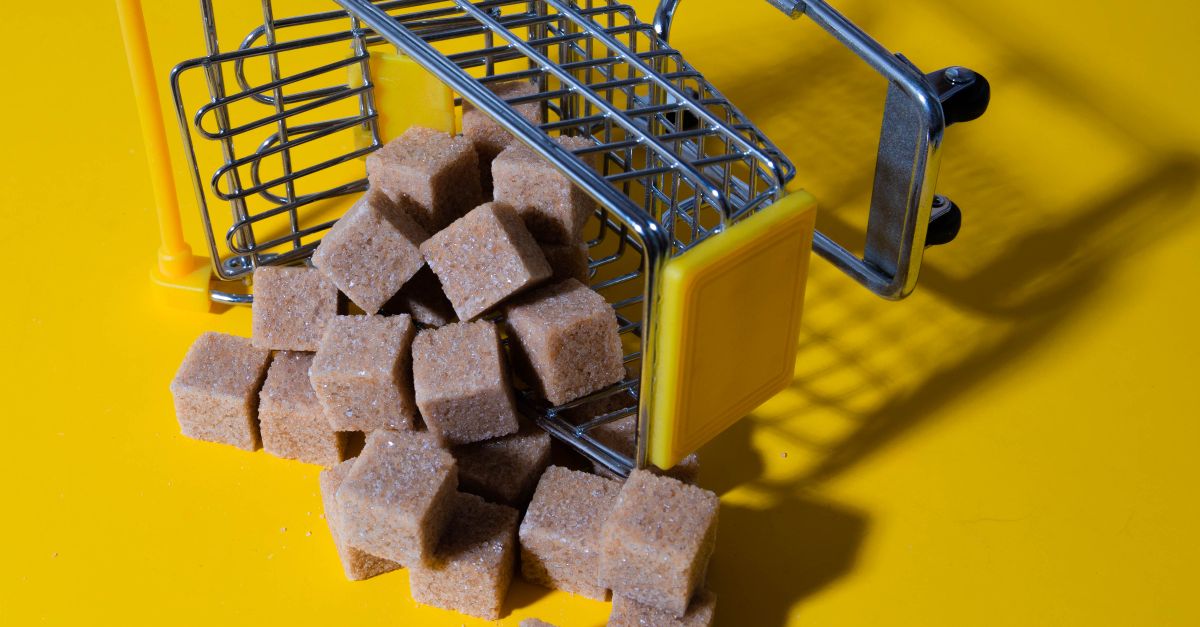
- Adults and children aged 11+: no more than 30g of free sugars a day — roughly 7 sugar cubes or 7 to 7.5 teaspoons
- Children aged 7 to 10: no more than 24g a day (about 6 sugar cubes)
- Children aged 4 to 6: no more than 19g a day (about 5 sugar cubes)
- Children aged 2 to 3: no more than 14g a day (around 3.5 sugar cubes)
- Under 1: no added sugar at all — sugar shouldn’t be added to food or drink for babies It’s worth being clear about what this limit doesn’t cover: sugars naturally present in whole fruit, vegetables, milk and plain yoghurt aren’t counted as “free sugars” and don’t need to be restricted in the same way. The guideline targets added and free sugars specifically, because that’s the intake most consistently linked to excess calorie consumption, weight gain and tooth decay. A single can of full-sugar cola (around 35g of sugar) can push an adult past their entire daily allowance before lunch — which starts to explain how the national average ends up so far over the line.
Where is Britain’s sugar actually coming from?
It’s tempting to assume chocolate and sweets are the main culprit, but NDNS 2019-2023 data tells a more useful story. For adults, “sugar, preserves and confectionery” (which includes table sugar added at home, jams and sweets) accounts for around a quarter of free sugar intake — significant, but not the largest source. The single biggest contributor across most age groups is actually the “cereals and cereal products” category — buns, cakes, pastries, breakfast cereals and sweet biscuits — which makes up somewhere between 29% and 40% of free sugar intake depending on age group. For children specifically, fruit juice and smoothies contribute a further 12-15%, and sugar-sweetened soft drinks add another 4-13%.
Soft drinks still deserve special attention among teenagers: 11-18 year-olds drink an average of 124ml of sugar-sweetened soft drinks a day, but the heaviest-drinking group in this age band consumes up to 606ml daily — more than a large bottle. Adult men aren’t far behind, averaging 108ml a day with heavy consumers reaching over 750ml. The Soft Drinks Industry Levy has already cut the average sugar content of taxed drinks by close to half since 2015, and the government has confirmed a further tightening: from January 2028, the sugar threshold drops from 5g to 4.5g per 100ml, and the levy will extend to sweetened milkshakes, flavoured milk and ready-to-drink coffees for the first time.
The hidden sugar problem: foods marketed as healthy
This is where most people’s sugar tally quietly climbs. Foods positioned as nutritious choices — flavoured yoghurts, granola, cereal bars, and shop-bought pasta or stir-fry sauces — are eaten often, in “healthy” contexts, and rarely checked against a label. A single pot of flavoured yoghurt can contain 15-20g of added sugar, not far off a standard chocolate bar, and “low-fat” versions are frequently reformulated with extra sugar to make up for the flavour lost when fat is removed. Granola and cereal bars marketed around wholegrains or dried fruit often use honey, syrup or fruit concentrate to bind and sweeten the mixture, which still counts as free sugar even though the ingredients sound wholesome.
Condiments and sauces are the sneakiest of all, because portions are small and habitual: a jarred pasta sauce, a squeeze of ketchup, a stir-fry sauce sachet. None of these look like “a sugary food,” so they’re rarely factored into a mental running total — but used daily, several small hits add up to a meaningful share of the 30g limit. The pattern across all of these is the same: sugar is being used for taste, texture or shelf life in products that don’t read as sweet, which is exactly why the NDNS figures keep coming in at double the guideline despite most people feeling like they don’t eat “that much sugar.”
How to read a UK food label for sugar
The good news is that UK packaging makes this checkable in seconds, once you know what to look for. Most pre-packed food carries the NHS-endorsed traffic-light label on the front, which colour-codes sugar (along with fat, saturated fat and salt) per 100g:
- Green: 5g of sugar or less per 100g — a lower-sugar choice
- Amber: between 5g and 22.5g per 100g — fine in moderation
- Red: more than 22.5g per 100g — high in sugar, worth limiting A product doesn’t need to be covered in red to be worth a second look — check the portion size next to the percentages too, since a “per serving” figure can look modest while the per-100g rating tells a different story. Where there’s no traffic-light label, the ingredients list is the next-best tool: ingredients are listed by weight from most to least, so if sugar (or one of its aliases) appears in the first few entries, the product is likely to be high in free sugars. Sugar shows up under many names, including cane sugar, brown sugar, high-fructose corn syrup, corn syrup, fruit juice concentrate or purée, fructose, sucrose, glucose, dextrose, maltose, nectars, maple syrup, agave syrup, molasses and treacle. Spotting two or three of these near the top of an ingredients list is a reliable sign that a “healthy-sounding” product carries more sugar than its branding suggests.
Conclusion
The gap between what the UK is eating and what SACN recommends isn’t really about chocolate bars and biscuit tins — it’s about the sugar quietly built into cereal, sauces, flavoured yoghurt and soft drinks that most of us don’t think to check. Adults have a working daily ceiling of 30g of free sugars (about 7 teaspoons); the practical way to stay near it is not to swear off sweet things entirely, but to get comfortable with two habits: glancing at the traffic-light label before a product goes in the trolley, and scanning the first few ingredients for sugar’s many aliases. Small, repeated swaps — a plain yoghurt with your own fruit instead of a flavoured pot, water or a sugar-free drink instead of a daily soft drink — tend to close more of the gap than cutting out an occasional treat.
This article is general nutrition information, not personal medical or dietary advice; if you have a health condition, are managing your or a child’s weight, or have concerns about diabetes risk, speak to a GP, registered dietitian or pharmacist before making significant changes to your diet.
FAQs
How much sugar should I eat a day in the UK?
Adults and children aged 11 and over should have no more than 30g of free sugars a day, following SACN’s guideline that free sugars make up no more than 5% of daily energy intake. Younger children have lower limits, from around 24g at age 7-10 down to 19g at age 4-6.
Is 30g of sugar a day a lot?
It’s roughly 7 teaspoons or 7 sugar cubes — enough that a single can of full-sugar fizzy drink or a large flavoured yoghurt can use up most or all of it in one go, which is why the average UK diet runs close to double this limit.
What foods contribute the most sugar to the UK diet?
NDNS data shows cereals and cereal products — cakes, pastries, breakfast cereals and biscuits — are the single largest source of free sugars for most age groups, ahead of table sugar, jams and confectionery. Soft drinks remain the top single source among teenagers specifically.
Do fruit and vegetables count towards the sugar limit?
No. Sugars naturally present in whole fruit, vegetables, milk and plain yoghurt are not classed as “free sugars” and aren’t restricted by the SACN guideline. Fruit juice and smoothies are the exception, because juicing releases the sugar from the fruit’s structure.
How can I tell if a food is high in sugar from the label?
Check the front-of-pack traffic light: green means 5g of sugar or less per 100g, amber is 5-22.5g, and red is anything over 22.5g per 100g. If there’s no traffic light, look at the ingredients list — sugar appearing in the first few entries usually signals a high-sugar product.
What are the other names for sugar on ingredient labels?
Common aliases include cane sugar, brown sugar, high-fructose corn syrup, corn syrup, fruit juice concentrate or purée, fructose, sucrose, glucose, dextrose, maltose, nectars, maple syrup, agave syrup, molasses and treacle.
Why do “healthy” foods like yoghurt and granola have so much sugar?
Manufacturers often add sugar, honey or syrup to boost flavour in reduced-fat or “natural”-sounding products, since removing fat also removes some of the taste. A flavoured yoghurt pot can carry 15-20g of added sugar — close to a small chocolate bar — despite its healthy positioning.
Is the Soft Drinks Industry Levy actually working?
Yes — the average sugar content of drinks covered by the levy has fallen by close to half since it was introduced in 2018. The government has confirmed a further tightening from January 2028, lowering the sugar threshold and extending the levy to sweetened milkshakes and flavoured milk drinks.
How many teenagers in the UK meet the sugar guideline?
Very few. NDNS 2019-2023 data shows only around 5% of 11-18 year-olds meet the SACN free sugar target, with girls in this age group averaging the highest intake of any group measured, at 12% of daily energy.
Does cutting sugar mean giving up treats completely?
No — the guideline is about overall pattern, not perfection. Most of the gap between UK intake and the SACN target comes from everyday foods eaten out of habit (cereal, sauces, soft drinks) rather than occasional treats, so small daily swaps tend to make more difference than banning specific foods.