The clocks go back: how to handle the hour change
The clocks go back at 2am on Sunday 25 October. Here is why the 'extra hour' can still throw you off, and how to adjust smoothly, including for babies and young children.
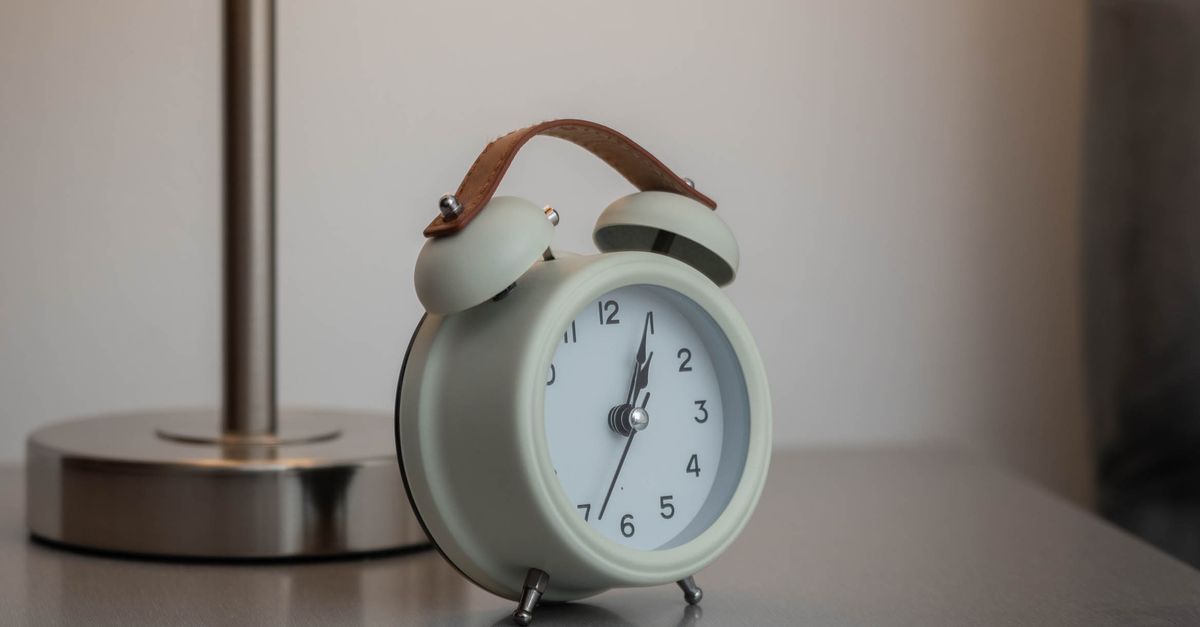
The clocks go back: how to handle the hour change
At 2am this Sunday, 25 October 2026, the clocks in the UK go back an hour to 1am, and British Summer Time ends for another year. On paper, you gain an hour in bed. In practice, a lot of people spend the following week waking at silly o’clock, flagging by mid-afternoon and wondering why “the easy one” feels so awkward.
There is a reason for that, and it is not in your head. The autumn change is gentler on your body than the spring one, but it still nudges your internal clock out of step with the one on the wall, and the effects are measurable for about a week. The fix is mostly light, timing and not wasting the extra hour on a lie-in.
Why gaining an hour can still feel rough
Your body runs on an internal clock, a roughly 24-hour cycle of alertness, hormone release and body temperature that is kept in time mainly by light. When the clocks go back, nothing about the sun changes, but your schedule suddenly sits an hour later relative to it. Your body still thinks 7am is 8am, so you wake early, get hungry before lunch and feel ready for bed by mid-evening.
For most adults, this is a minor wobble. Your internal clock usually catches up within a few days, given enough daylight in the morning and a reasonably steady routine. The trouble comes when the change lands on top of an already irregular schedule: a late Saturday night, a long Sunday lie-in, then an early Monday alarm. That stack is what turns a one-hour change into a week of feeling jet-lagged.
What the research says about the autumn change
Most alarming clock-change headlines are about spring, when you lose an hour. The autumn picture is milder and more mixed.
On heart health, a 2019 meta-analysis in the Journal of Clinical Medicine pooled seven studies covering more than 115,000 people. It found a small increase in heart attack risk after the spring change, but the week after the autumn change looked much the same as the comparison periods. The authors noted that better-adjusted studies are still needed.
Road safety is the other question that comes up every October, because the evening commute is suddenly in the dark. A 2017 systematic review in BMJ Open looked at 24 studies on clock changes and road collisions and found the short-term results inconsistent. The honest summary is that the evidence neither proves nor rules out a meaningful effect, but being visible on darker evenings is sensible whatever the statistics say.
How to adjust in the days before and after
You do not need an elaborate plan for one hour. A few small moves cover most of it:
- Start shifting a few days early if you are sensitive to change. Move your bedtime and wake time about 15 minutes later each day from Thursday or Friday, so the new time is already familiar by Sunday. This is the approach recommended by NHS sleep specialists for children, and it works for adults too
- Use the extra hour wisely. If you can, get up at your usual new time on Sunday rather than sleeping in. A long lie-in pushes your body clock later, which makes Monday harder
- Get outside in the morning. Daylight soon after waking is the strongest signal your body clock receives. Time outdoors, or by a bright window on a grey day, helps you settle into the new schedule faster
- Keep mealtimes on the new clock. Eating at your normal times by the new clock helps your body realign, even if you are not especially hungry at first
- Do not fight sleepiness with a late-afternoon nap. If the early darkness makes you drowsy, keep any nap short and early, or try a walk instead, so you still feel sleepy at bedtime
- Wind down as usual. Dim lights in the hour or so before bed, keep your bedroom dark and cool, and avoid large meals and alcohol late in the evening, in line with NHS sleep advice
Babies, children and the clock change
Small children do not care what the clock says. A child who usually wakes at 6am will, on Sunday, wake at what is now 5am.
Norfolk and Suffolk NHS Foundation Trust’s Better Sleep Programme suggests a gradual approach: in the days before the change, move bedtime 15 minutes later each day, adjusting wake-up time to match so your child gets the same amount of sleep overall. Opening curtains as soon as they wake and getting plenty of natural daylight during the day helps their body clock follow. Activity earlier in the day and dim, calm evenings help too.
If you did not adjust in advance, do it afterwards: keep naps and meals close to the new times, push bedtime a little later each night, and expect a week or so of earlier mornings.
Making the most of the darker months
Once the change has settled, the bigger shift is the darker evenings, which can sap energy and motivation. A few habits help:
- Prioritise daylight early. A walk at lunchtime or a morning commute on foot gets you more natural light in winter than almost anything you can do in the evening
- Keep a regular rhythm. Going to bed and getting up at similar times each day, including at weekends, helps your body clock stay stable through the darker months
- Stay visible. If you walk, run or cycle after dark, wear something bright or reflective and use lights
If your mood drops noticeably every year as the days shorten, that may be more than the clock change. It is worth reading our guide to seasonal affective disorder and speaking to your GP.
Final thoughts
The clocks going back is the gentler of the two annual changes, and for most people any disruption fades within a week or two. The most effective moves are simple: shift gradually if you are sensitive to change, avoid an epic Sunday lie-in, get morning daylight and keep your routine steady. Children may take a little longer, but they get there. This is general information, not medical advice; if poor sleep lasts for weeks or is affecting your daily life, speak to your GP, and contact NHS 111 if you are worried about someone’s health and unsure where to turn.
FAQs
When do the clocks go back in 2026?
In the UK, the clocks go back one hour at 2am on Sunday 25 October 2026, when the time becomes 1am. This marks the end of British Summer Time and the return to Greenwich Mean Time.
Do I get an extra hour of sleep when the clocks go back?
On the night itself, yes. Your body clock may still wake you at the old time for several days, so the gain often feels smaller than expected.
How long does it take to adjust to the clocks going back?
Most adults adjust within a few days to a week. A large 2023 study found sleep problems were higher in the week after the autumn change but had disappeared two weeks later.
Why am I waking up so early after the clocks change?
Your internal clock is still running on summer time, so your body thinks it is an hour later than it is. Morning daylight and a steady routine help it catch up.
How do I adjust my baby’s sleep for the clocks going back?
Move bedtime and wake time about 15 minutes later each day in the days before the change, and use morning daylight and regular mealtimes to help their body clock follow. Adjusting afterwards in the same way also works.
Is the autumn clock change bad for your heart?
The evidence suggests not in any meaningful way. A 2019 meta-analysis found a small rise in heart attacks after the spring change, but no clear increase in the week after the autumn change.
Should I have a lie-in on the Sunday the clocks go back?
It is better not to sleep in much. A long lie-in pushes your body clock later and can make the first working day harder. Try to get up near your usual new time.
Do the darker evenings increase road accidents?
The research is mixed. A 2017 review found inconsistent short-term effects on collisions, but darker evening commutes are a good reason to wear reflective or bright clothing and use lights.
Can the clock change affect my mood?
It can leave you feeling tired or flat for a few days. If low mood persists through winter, speak to your GP.
Sources
- Visit London: When do the clocks change in 2026?
- American Academy of Neurology: How is sleep affected by changing clocks and seasons? (Postuma, Neurology, 2023)
- Manfredini et al.: Daylight saving time and acute myocardial infarction, a meta-analysis, Journal of Clinical Medicine (2019)
- Carey & Sarma: Impact of daylight saving time on road traffic collision risk, a systematic review, BMJ Open (2017)
- Norfolk and Suffolk NHS Foundation Trust: Sleep expert's tips to help children sleep better as the clocks go back
- NHS Every Mind Matters: How to fall asleep faster and sleep better