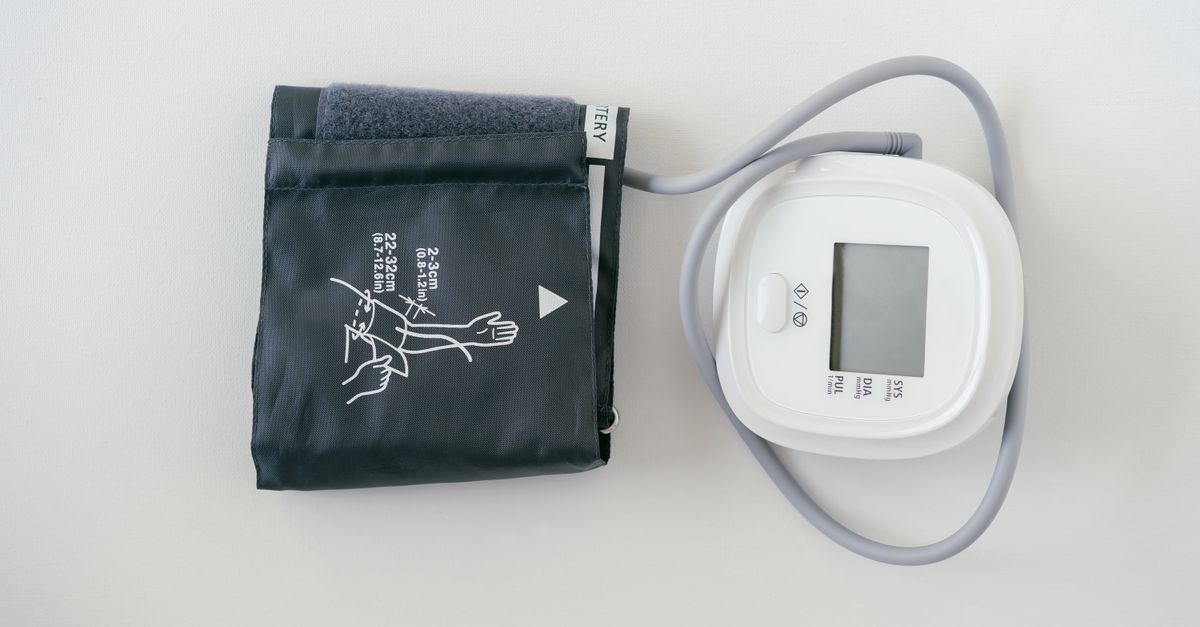
How to lose belly fat: what works, and why crunches won't do it
You can't crunch your way to a flatter stomach. Here's how to check whether your belly fat is a health risk, why spot reduction doesn't work, and what the evidence shows actually shifts visceral fat.
How to lose belly fat: what works, and why crunches won’t do it
“How to lose belly fat” is one of the most searched health questions in the UK, and it’s easy to see why. It’s the fat many of us notice first when trousers start to feel tight. It also matters more for health than fat elsewhere on the body.
Unfortunately, it’s also a magnet for bad advice: ab challenges, “flat tummy” teas, and workouts that promise to burn fat from your middle in 14 days. Here’s what the evidence actually shows about losing belly fat, which approaches work, and why doing hundreds of sit-ups isn’t one of them.
Not all belly fat is the same
The fat you can pinch around your middle is subcutaneous fat, which sits just under the skin. Beneath that, wrapped around your liver, gut and other organs, is visceral fat.
Visceral fat is the one to worry about. It’s metabolically active, releasing substances that drive inflammation and affect how your body handles blood sugar and fat. Carrying too much of it is linked to type 2 diabetes, high blood pressure, heart disease, stroke and some cancers.
You can have a lot of visceral fat without looking overweight, which is why weight and BMI alone can be misleading. Some people are also more prone to storing fat around the middle, including people from South Asian, Chinese, other Asian, Middle Eastern, Black African and African-Caribbean backgrounds. Women often notice a shift towards the belly around the menopause, as falling oestrogen changes where the body stores fat.
How to check whether your belly fat is a health risk
You don’t need a scan. A tape measure gives you a useful estimate.
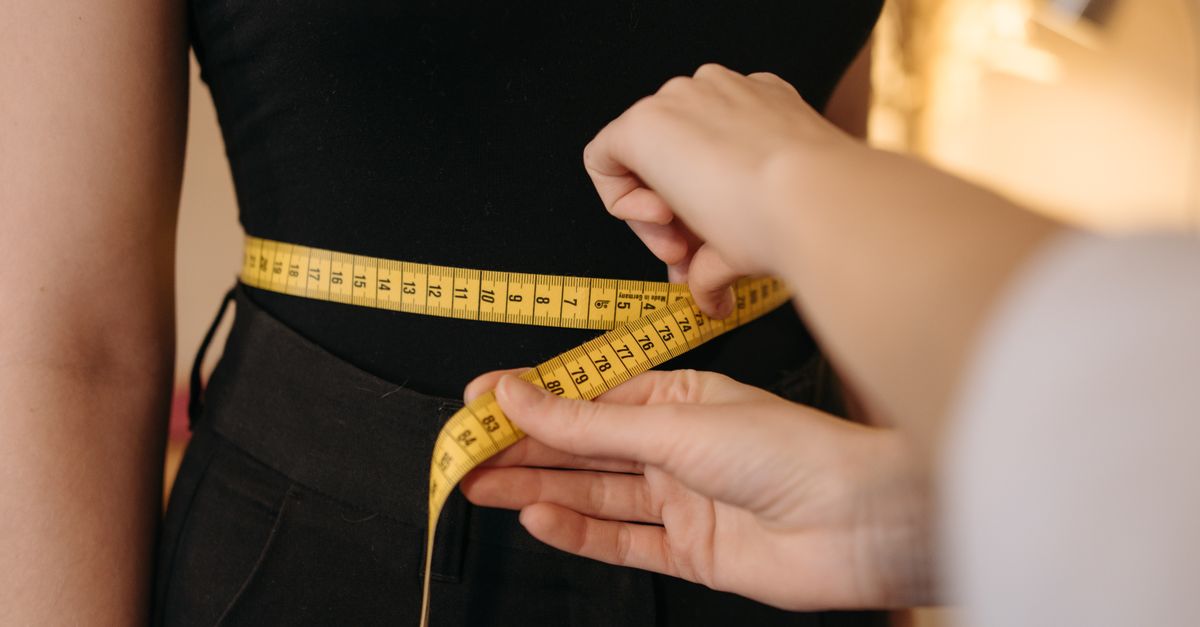
To measure your waist the NICE way, find the bottom of your ribs and the top of your hips, then wrap a tape measure around your middle halfway between the two. This will usually be just above your belly button. Breathe out naturally before reading the number.
Then divide your waist by your height, using the same units. For example, a 96.5cm waist divided by a height of 170cm gives a waist-to-height ratio of 0.57.
In its 2025 obesity guideline, NICE classifies the results for adults with a BMI under 35 as:
- 0.4 to 0.49: healthy, with no increased health risks
- 0.5 to 0.59: increased health risks
- 0.6 or more: further increased health risks
The simple rule is to keep your waist to less than half your height. The NHS also gives waist sizes on their own: your risk of health problems is higher if your waist is 94cm (37 inches) or more for men, or 80cm (31.5 inches) or more for women. It advises seeing a GP if your waist is 102cm (40 inches) or more for men, or 88cm (34.5 inches) or more for women. Lower thresholds may apply if you’re from one of the groups above.
Why sit-ups won’t burn belly fat
The idea that you can lose fat from a particular area by exercising the muscles underneath it is called “spot reduction”. It’s been studied for more than 60 years, and it doesn’t hold up.
Older and newer studies point the same way. In a 1984 study, people who did more than 5,000 sit-ups over 27 days lost fat cell size at the stomach to the same degree as at the back and buttocks. In a 2013 study where people trained only one leg for 12 weeks, the fat they lost came mainly from the upper body and trunk, not from the leg they had trained.
The reason is that when your body needs energy, it draws fat from stores all over the body through the bloodstream, not from the fat nearest the working muscle. Where you lose fat first is largely down to your genes, sex and age.
Core exercises are still worth doing. They build strength and stability, and they’ll be more visible once there’s less fat covering them. They just aren’t a fat-loss tool.
What actually reduces belly fat
1. Aerobic exercise, especially at moderate to higher intensity
This is where the evidence is strongest for visceral fat specifically. A 2013 meta-analysis in PLOS ONE found that aerobic training of moderate or high intensity had the greatest potential to reduce visceral fat in overweight men and women, even without dieting. In studies of around 12 weeks, the reductions were measurable on CT scans.
A larger 2022 review of trials in adults with overweight or obesity reached a similar conclusion: regular aerobic exercise led to modest reductions in waist size and visceral fat, with higher intensity exercise possibly offering more benefit.
The encouraging part is that this happens even when the scales barely move, so don’t judge your progress on weight alone. Brisk walking, cycling, swimming, running and rowing all count. If you’re starting from scratch, zone 2 cardio is a sustainable way to build a base, and you can add shorter, harder intervals once you’re fitter.
2. Strength training
Resistance training on its own has a smaller effect on visceral fat than aerobic exercise, but it still helps. It also builds and preserves muscle, which supports your metabolism and long-term health, especially as you get older. Combining the two tends to give the best results for body composition. Our guide to the first eight weeks of strength training is a good place to start.
UK guidelines recommend at least 150 minutes of moderate activity a week, plus muscle-strengthening activities on at least two days.
3. A modest calorie deficit
Exercise helps, but losing a meaningful amount of fat almost always also requires eating a bit less than you burn. The encouraging news is that visceral fat tends to respond well to weight loss. One review estimated that losing around 5% of your body weight through diet and exercise could reduce visceral fat by roughly 15% to 25%.
You don’t need an extreme diet. Changes that make a lasting deficit easier include:
- Prioritising protein at each meal, which helps you feel full and protects muscle while you lose fat
- Eating more fibre from vegetables, beans, lentils, wholegrains and fruit
- Cutting back on ultra-processed foods, which make it easy to overeat. One tightly controlled trial found people ate around 500 more calories a day on an ultra-processed diet, as we explain in our piece on ultra-processed food and weight gain
- Swapping sugary drinks for water, tea, coffee or sugar-free alternatives
There is no particular food that burns belly fat. Apple cider vinegar, green tea extracts and “fat-burning” supplements have little or no good evidence behind them.
4. Drink less alcohol
Alcohol adds calories that are easy to overlook, it can lower your guard around food, and heavy drinking is linked to more fat around the middle. The UK Chief Medical Officers advise no more than 14 units a week, spread over three or more days.
5. Sleep and stress
Short sleep is linked to higher appetite and weight gain, and long-term stress is associated with fat being stored around the middle, possibly through the stress hormone cortisol. Neither is a quick fix, but if you’re sleeping badly or constantly stressed, sorting that out can make the rest easier to stick to.
How long does it take to lose belly fat?
There’s no exact answer, because it depends on how much fat you’re carrying, your age, sex and genes, and how consistent you are. The research suggests that changes in visceral fat can be measured within about 12 weeks of regular exercise. Visible changes to your waistline usually take longer.
Measure your waist every few weeks, rather than relying on the scales or the mirror. If your waist-to-height ratio is going down, you’re losing the fat that matters most, even if your weight hasn’t changed much.
Final thoughts
You can’t choose where your body loses fat, so the answer to how to lose belly fat is the same as the answer to how to lose fat overall: regular aerobic exercise, some strength training, a modest and sustainable calorie deficit, less alcohol and decent sleep. The reassuring part is that visceral fat, the type most harmful to health, is often the first to respond. Measure your waist rather than chasing a number on the scales, and give it at least three months. This is general information, not medical advice.
FAQs
What is the fastest way to lose belly fat?
There’s no fast route, but the combination with the best evidence is regular moderate to vigorous aerobic exercise plus a modest calorie deficit. Visceral fat often responds within around 12 weeks.
Do sit-ups and crunches burn belly fat?
No. A six-week trial of daily abdominal exercises found no reduction in belly fat or waist size, only stronger abdominal muscles. Fat loss happens across the whole body.
What is a healthy waist size?
NICE advises keeping your waist to less than half your height. The NHS says risk is higher with a waist of 94cm or more for men or 80cm or more for women.
Why is belly fat so hard to lose?
Your genes, sex, age and hormones influence where you store fat and where you lose it first. For many people, especially men and women after the menopause, the belly is a common storage site.
Can you lose belly fat without losing weight?
Yes, to some extent. Studies show aerobic exercise can reduce visceral fat even when overall weight changes very little, which is why measuring your waist is useful.
Is walking enough to lose belly fat?
Brisk walking is aerobic exercise and can help reduce visceral fat, especially if you do it regularly and build up the pace or duration. Combining it with a modest calorie deficit gives better results.
Do any foods burn belly fat?
No single food burns fat. Diets higher in protein and fibre and lower in ultra-processed food make it easier to eat less overall, which is what drives fat loss.
Why do I have belly fat when I’m not overweight?
Some people store more fat around the middle due to genetics, ethnicity, age or the menopause. Measuring your waist-to-height ratio gives a better picture than weight or BMI alone.
Sources
- NICE NG246 (2025): Overweight and obesity management, identifying and assessing central adiposity
- NHS: Why is my waist size important?
- Vispute et al. (2011), The effect of abdominal exercise on abdominal fat, Journal of Strength and Conditioning Research
- Katch et al. (1984), Effects of sit up exercise training on adipose cell size and adiposity, Research Quarterly for Exercise and Sport
- Ramírez-Campillo et al. (2013), Regional fat changes induced by localized muscle endurance resistance training, JSCR
- Vissers et al. (2013), The effect of exercise on visceral adipose tissue in overweight adults: systematic review and meta-analysis, PLOS ONE
- Armstrong et al. (2022), Aerobic exercise, waist circumference and visceral adipose tissue in adults with overweight or obesity: systematic review and meta-analysis, Obesity Reviews
- UK Chief Medical Officers' low risk drinking guidelines
- UK Chief Medical Officers' physical activity guidelines