Lower back pain: what actually helps, and what to skip
Low back pain is the world's leading cause of disability, and much of what we instinctively do about it doesn't help. Here's what UK guidelines recommend, what to skip, and the warning signs that need urgent attention.
Lower back pain: what actually helps, and what to skip
If you’ve ever bent down to tie a shoelace and felt your lower back seize, you’re in very large company. Low back pain is the leading cause of disability in the world. A 2023 Global Burden of Disease analysis in The Lancet Rheumatology estimated that 619 million people had it in 2020, and projected that more than 800 million will by 2050.
It’s also one of the areas of health where what people instinctively do, such as resting in bed, waiting for a scan or reaching for paracetamol, is often not what the evidence supports. Here’s what actually helps lower back pain, what UK guidelines advise against, and the warning signs that mean you should get checked quickly.
Why does my lower back hurt?
For most people, there’s no single identifiable cause. Doctors call this “non-specific” low back pain. It usually involves the muscles, ligaments and joints of the spine being irritated or strained, perhaps by lifting, a sudden twist, a long drive or simply a stiff morning. Sometimes there’s no obvious trigger at all.
Less commonly, back pain is linked to a specific problem such as a slipped (herniated) disc pressing on a nerve, which can cause sciatica, a sharp or burning pain that travels down the leg. Very rarely, it’s a sign of something serious such as a fracture, infection or cancer. That’s what the warning signs further down are for.
One of the most useful things to understand is that pain doesn’t always equal damage. A sore back can be very painful without anything being harmed, and feeling some discomfort as you move doesn’t mean you’re making it worse. Scans also show disc bulges and wear in many people who have no pain at all, which is one reason they’re often unhelpful.
How long does lower back pain last?
The NHS says back pain often improves on its own within a few weeks. Many NHS physiotherapy services say most episodes settle within six to eight weeks, and sciatica can take a little longer.
For some people, it lingers or keeps coming back. Pain lasting more than three months is usually described as chronic, and it benefits from a different, more active approach rather than more rest or stronger painkillers.
What actually helps
Keep moving
This is the single most consistent piece of advice in UK guidance. The NHS advises staying active and continuing with your daily activities as much as you can, and not staying in bed for long periods. Gentle movement keeps the muscles from stiffening and tends to speed up recovery.
That doesn’t mean pushing through severe pain. It means doing what you can, little and often: short walks, getting up regularly from your chair, and gradually returning to normal activities, including work if possible.
Do exercises and stretches
Exercise is the foundation of NICE’s guideline on low back pain, because it works and, unlike passive treatments, you can keep doing it long after the episode is over. NICE recommends considering a group exercise programme for people with a specific episode or flare-up, and says the type of exercise should suit the person’s needs and preferences.
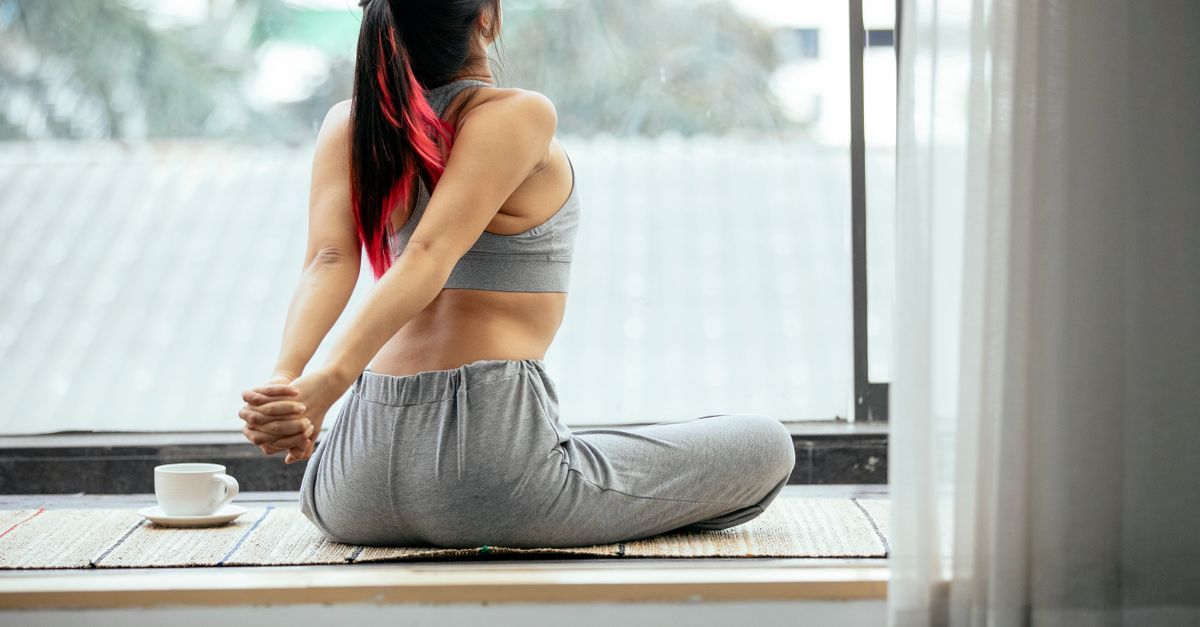
There’s no single best exercise. The NHS suggests activities such as walking, swimming, yoga and pilates. Simple moves like knee-to-chest stretches, gentle back rotations while lying down, pelvic tilts and bridges are a good place to start. Stop any exercise that makes your pain noticeably worse, and build up gradually.
If you’re new to strength work, our guide to the first eight weeks of strength training covers how to start safely. Getting stronger overall, not just through your core, makes everyday lifting and bending easier.
Use heat or cold
A heat pack or hot water bottle wrapped in a tea towel can ease stiffness and muscle spasm. Some people prefer an ice pack (or a bag of frozen peas) wrapped in a cloth in the first day or two. There’s no strong evidence that one is better than the other, so use whichever feels better.
Choose the right painkillers
The point of painkillers for back pain is to help you keep moving, not to make the pain disappear entirely.
Ibuprofen isn’t suitable for everyone, including some people with asthma, stomach ulcers, kidney problems or heart disease, so check with a pharmacist if you’re unsure.
Sleep in a supportive position
Pain often makes sleep harder, and poor sleep can make pain feel worse. Try lying on your side with a pillow between your knees, or on your back with a pillow under your knees. Our guide to falling asleep faster has more ideas if pain is keeping you awake.
Look after your mood
Research suggests that how you feel about back pain affects how quickly you recover. Worry about damage, fear of movement and low mood can all make pain feel worse and last longer. That’s not to say the pain is “in your head”. It’s that pain and the nervous system are closely linked. For people at higher risk of long-term problems, NICE recommends exercise combined with a psychological approach such as cognitive behavioural therapy.
What to skip
Based on the NICE guideline, these are unlikely to help and generally aren’t recommended for low back pain:
- Long periods of bed rest, which can slow recovery
- Back belts and corsets, foot orthotics and rocker-sole shoes
- Acupuncture, which NICE does not recommend for low back pain
- Routine X-rays or MRI scans, unless a specialist thinks the result would change your treatment
- Paracetamol on its own, and opioids for long-term back pain
Manual therapies such as massage, spinal manipulation or mobilisation may help some people, but NICE says they should only be used as part of a package that includes exercise, not on their own.
Preventing back pain from coming back
You can’t prevent every episode, but these habits lower the odds:
- Stay active and keep up regular exercise, including some strength work
- Break up long periods of sitting with short walks or a quick stretch
- When lifting, keep the load close to your body, bend your knees and avoid twisting
- Keep to a healthy weight
- Don’t smoke, as smoking is linked to back pain
When to see a doctor
The NHS advises seeing a GP if your back pain hasn’t improved after a few weeks of treating it at home, if it’s stopping you doing your daily activities, if it’s severe or getting worse, or if you’re worried or struggling to cope. In many areas you can also refer yourself directly to an NHS physiotherapist or a first contact physiotherapist at your GP surgery.
Final thoughts
Most lower back pain looks scarier than it is, and it usually gets better within weeks. The things that help most are also the least dramatic: stay active, do gentle exercise, use heat and the right painkillers to keep moving, and avoid long spells in bed. Scans, belts and stronger painkillers are rarely the answer. If your pain doesn’t improve, see your GP or a physiotherapist, and get urgent help if you notice any of the warning signs above. This is general information, not medical advice.
FAQs
What is the fastest way to relieve lower back pain?
Keep moving gently, use a heat pack, and take an anti-inflammatory such as ibuprofen if it’s suitable for you. There’s no instant cure, but staying active tends to speed up recovery.
Should I rest or exercise with lower back pain?
Keep as active as you can. Short rests are fine when pain is bad, but long periods of bed rest can slow your recovery.
Is paracetamol good for back pain?
The NHS says paracetamol on its own isn’t recommended for back pain, because it doesn’t seem to work well for it. It may be used alongside another painkiller.
Do I need a scan for back pain?
Usually not. NICE advises against routine X-rays or MRI scans for low back pain unless a specialist thinks the result would change your treatment.
How long does lower back pain take to go away?
Most episodes improve within a few weeks, and many settle within six to eight weeks. Sciatica can take a little longer.
What is the best sleeping position for lower back pain?
Try lying on your side with a pillow between your knees, or on your back with a pillow under your knees, to keep your spine in a comfortable position.
Is walking good for lower back pain?
Yes. Walking is gentle, easy to build up and keeps your back moving. The NHS lists walking, swimming, yoga and pilates as activities that may help.
When is back pain an emergency?
Get urgent help if you have numbness around your genitals or bottom, new problems controlling your bladder or bowels, or weakness in both legs. These can be signs of cauda equina syndrome.
Sources
- GBD 2021 Low Back Pain Collaborators (2023), Global, regional and national burden of low back pain 1990 to 2020, The Lancet Rheumatology
- IHME: The Lancet, low back pain is the leading cause of disability
- NICE NG59: Low back pain and sciatica in over 16s, recommendations
- Chartered Society of Physiotherapy: Neil O'Connell on the NICE low back pain guideline
- NHS: Back pain
- NHS: Back pain treatment and urgent advice
- Northumbria Healthcare NHS: Self-care for lower back pain
- Whittington Health NHS: Back pain leaflet (cauda equina syndrome)
- County Durham and Darlington NHS: About back pain