Dubai chocolate and the sugar maths of viral food trends
Dubai chocolate has gone from viral TikTok fad to permanent supermarket staple — here's what its sugar content actually adds up to, and how it compares to other viral treats like Grimace shakes and bubble tea.
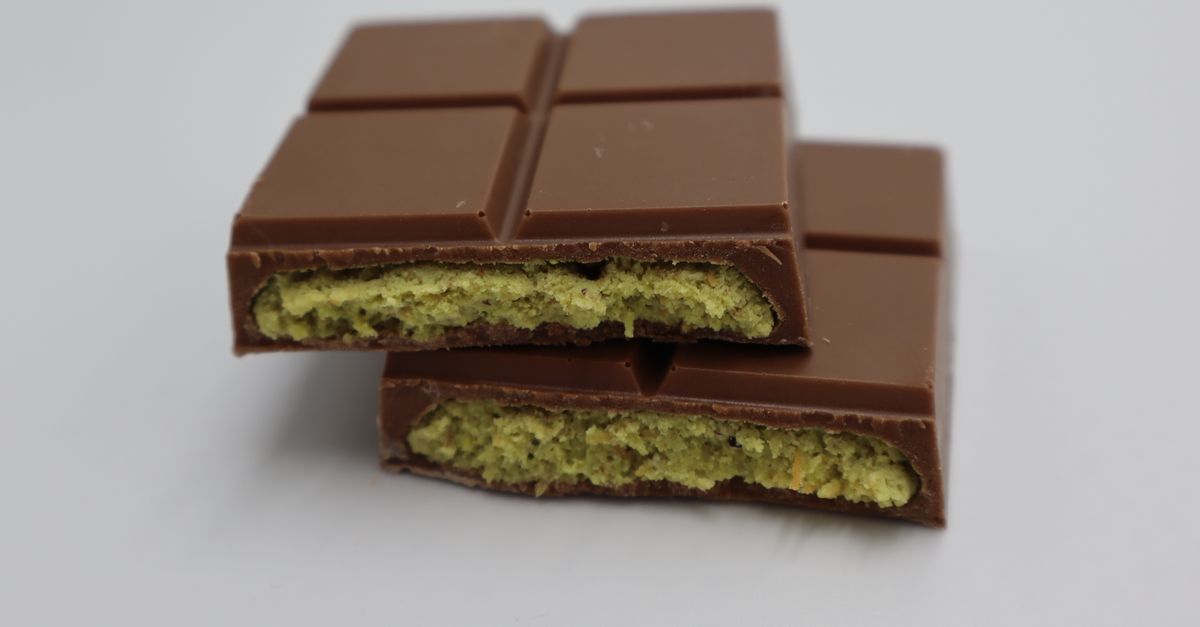
Dubai chocolate sugar content is one of the most-searched nutrition questions to come out of a food trend in years — and once you see the numbers, it’s obvious why. The pistachio-and-kunafa bar that broke TikTok in December 2023 hasn’t faded the way most viral snacks do. It’s now a permanent fixture on UK supermarket shelves, sold by big names like Lindt as well as a long tail of copycat brands, which means the question isn’t “will I ever try this” but “how does eating it regularly fit into a normal week.”
The honest answer is that Dubai chocolate sits firmly in dessert territory, nutritionally speaking, and a single serving can eat up more than half an adult’s recommended daily sugar allowance. That’s not a reason to feel bad about enjoying it. But it is useful to know, because Dubai chocolate is really just the most famous recent example of a pattern that keeps repeating: the more visually spectacular a food is online, the less its sugar content tends to get talked about. This article breaks down the real numbers — for Dubai chocolate and a few of the other treats that have gone viral in its wake — so you can enjoy them with your eyes open.
How much sugar is in Dubai chocolate?
A standard 40g portion of Dubai-style chocolate — roughly a quarter of a typical 145g bar — contains around 19g of sugar. That figure comes from Lindt’s own UK nutrition label for its Dubai Style Chocolate, which lists 47g of sugar per 100g. Other brands vary: independently logged nutrition data for smaller retail bars shows sugar contents ranging from around 13g to over 20g per individual bar, depending on the size and recipe, with some bars’ ratios running as high as 40-plus grams of sugar per 100g.
To put that in context, the NHS recommends adults keep “free sugars” — added sugars and those in honey, syrups and fruit juice, not sugars naturally occurring in milk or whole fruit — to no more than 30g a day, following guidance from the Scientific Advisory Committee on Nutrition (SACN). That’s about seven teaspoons. A 40g portion of Dubai chocolate at roughly 19g of sugar is already close to two-thirds of that daily allowance, before you’ve had anything else — a cup of tea with sugar, a yoghurt with fruit compote, a can of fizzy drink.
None of this makes Dubai chocolate uniquely bad; a lot of chocolate and confectionery sits in a similar range. What makes it worth flagging is the portion size people actually eat. These bars are thick, and the pistachio-kunafa filling makes them moreish in a way that encourages finishing the lot in one sitting rather than the “quarter bar” the label assumes.
Why hyper-visual food goes viral in the first place
Dubai chocolate didn’t go viral because of its nutrition panel — it went viral because it’s genuinely satisfying to watch. The bar has a thick, glossy shell that snaps cleanly on camera, then reveals a bright green pistachio cream and the audible crunch of shredded kunafa pastry underneath. That combination of visual contrast, a clean “reveal” moment and a satisfying sound is close to a checklist for what does well on short-form video: strong colour, texture change, and a noise that works even with the sound off.
There’s also a psychological pull to watching other people enjoy food, sometimes called “food porn” or mukbang-adjacent content, and researchers have started looking at what that exposure actually does to viewers. A 2025 study in the journal Nutrients followed 314 young adults and found that heavier exposure to food advertising and food content on social media was associated with stronger cravings, higher perceived hunger, and more impulsive food ordering. In other words, scrolling past a satisfying chocolate-snap video repeatedly may nudge you toward wanting it — quite apart from whether you were hungry a minute before.
Add genuine novelty (most UK shoppers hadn’t heard of kunafa before 2024), an exclusivity story (originally only available from one small Dubai chocolatier), and heavy supermarket promotion once the trend proved itself commercially, and you get a product almost engineered for virality — regardless of what’s actually in it.
It’s not just Dubai chocolate: three other viral treats and the real numbers
Dubai chocolate is the highest-profile recent example, but the same pattern — visually spectacular, sugar-heavy, rarely discussed in those terms — shows up across several other trends.
McDonald’s Grimace Shake (2023) turned a purple milkshake into a meme built around people filming themselves drinking it. According to McDonald’s own published nutrition information, a standard Grimace’s Birthday Shake contains around 68g of sugar — more than double the NHS daily limit in one drink.
Crumbl cookies, the oversized American cookie chain that regularly goes viral on UK TikTok feeds even without permanent UK stores, sell single cookies that, per analysis by the US Center for Science in the Public Interest, can contain anywhere from around 40g to over 100g of sugar depending on the flavour — some flavours alone exceed three times the daily free-sugar limit in one cookie.
Bubble tea, less a single viral moment than a sustained high-street trend, typically contains 20–50g of sugar in a standard cup at normal sweetness, and considerably more with extra syrup, toppings or a higher sweetness setting — easily pushing past 100g in a heavily customised order.
None of these are presented to shame anyone who enjoys them. They’re popular precisely because they’re delicious and fun to share. The point is simply that “viral” and “nutritionally lightweight” are two entirely separate categories, and food marketing rarely draws attention to the second one.
How a viral treat actually fits into a normal week
None of this means Dubai chocolate — or Crumbl cookies, or a Grimace shake, or a full-sugar bubble tea — needs to be off-limits. Context is what matters. If you eat a 40g portion of Dubai chocolate on a day when the rest of your food and drink is lower in added sugar, it’s a treat like any other dessert, not a crisis.
A few practical ways people actually make this work: treating a rich viral snack as a genuine “instead of”, not an “as well as” — swapping it in for the usual dessert or sugary drink that day rather than adding it on top; sharing a bar or shake rather than finishing a full portion solo, since these products are often sized for more than one person despite being marketed and photographed as a single serving; and checking the actual label where you can, since sugar content varies a surprising amount between brands selling what looks like the same product.
None of this requires giving anything up permanently or feeling guilty about a single treat. It’s simply easier to make an informed choice about how often, and how much, once you know roughly what’s in it.
Conclusion
Dubai chocolate isn’t a health food, and it was never marketed as one — it’s a rich, dessert-style chocolate bar that happens to have gone viral, and its sugar content (around 19g in a modest 40g portion, against a 30g daily free-sugar guideline) reflects that. The same is true of the other treats that have had their own viral moment, from Grimace shakes to loaded bubble teas to giant American cookies: spectacular on camera, sugar-dense in reality, and worth enjoying with a rough sense of scale rather than either bingeing on or avoiding entirely.
The most useful habit isn’t cutting these foods out — it’s noticing when a treat is genuinely occasional versus when a trend has quietly become a weekly habit, and adjusting the rest of the day (or week) accordingly. This article is general nutrition information, not medical advice; if you have specific concerns about sugar intake, diabetes risk, or your diet more broadly, it’s worth a conversation with your GP or a registered dietitian.
FAQs
How much sugar is in Dubai chocolate?
A 40g portion (about a quarter of a standard 145g bar) contains roughly 19g of sugar, based on Lindt’s UK nutrition label for its Dubai Style Chocolate (47g sugar per 100g). Other brands vary, with individual bars ranging from around 13g to over 20g of sugar depending on size and recipe.
Is Dubai chocolate bad for you?
Not inherently — it’s a chocolate bar, and like most rich chocolate confectionery it’s high in sugar and saturated fat. Eaten occasionally and in a sensible portion, it fits into a normal diet the same way any dessert does. Eaten daily in full-bar portions, it would use up most or all of an adult’s recommended sugar allowance from one item alone.
What is Dubai chocolate actually made of?
Most versions combine a milk or dark chocolate shell with a filling of pistachio cream (or paste) and toasted, shredded kunafa (kataifi) pastry, sometimes with tahini. The exact recipe and quality of ingredients varies significantly between the original small-batch versions and mass-market supermarket copies.
How many calories are in Dubai chocolate?
This varies by brand, but a typical 100g of Dubai-style chocolate runs to roughly 550–600 calories, in line with other rich milk chocolate confectionery. A 40g portion would be around 220–240 calories.
Why did Dubai chocolate go viral in the first place?
A December 2023 TikTok video by Dubai-based creator Maria Vehera, showing the bar’s glossy chocolate shell being snapped open to reveal bright green pistachio cream and crunchy kunafa, passed well over 100 million views. The combination of striking visuals, a satisfying “reveal” and crunch sound, and initial scarcity (it was only available from one small Dubai chocolatier) made it highly shareable.
Is Dubai chocolate still popular in 2026?
Yes, though it’s shifted from a single viral moment to a permanent product category. Major chocolate brands and UK supermarkets now stock ongoing “Dubai style” ranges rather than treating it as a one-off fad, and new videos using the format continue to circulate.
What’s the daily sugar limit for adults in the UK?
The NHS recommends no more than 30g of free sugars a day for adults, based on guidance from the Scientific Advisory Committee on Nutrition (SACN) that free sugars should make up no more than 5% of daily energy intake. Free sugars include added sugars and those in honey, syrups and fruit juice, but not sugars naturally in milk or whole fruit.
Are other viral foods, like Crumbl cookies or bubble tea, also high in sugar?
Generally, yes. A single Crumbl cookie can contain anywhere from around 40g to over 100g of sugar depending on the flavour, McDonald’s Grimace Shake contains around 68g, and a customised bubble tea can range from 20g well past 100g depending on sweetness level and toppings.
Can I still have Dubai chocolate if I’m watching my sugar intake?
Yes — an occasional small portion fits into most balanced diets. The main things to watch are portion size (these bars are easy to eat in one sitting despite being sized for several servings) and frequency, since the issue is usually a viral treat becoming a weekly habit rather than the odd portion.
Why do sugary, highly visual foods go viral more than plain healthy food?
Short-form video rewards strong visual contrast, texture changes and satisfying sounds — a chocolate snap, a cheese pull, a milkshake pour — all of which sugary, indulgent foods tend to deliver more reliably than simple, minimally processed meals. Research also links repeated exposure to this kind of food content with increased cravings, which helps the cycle keep going.
Sources
- NHS - Sugar: the facts
- SACN sugar consumption report summary (BDA)
- The Grocer - Dubai chocolate, murky supply chains and the trouble with going viral (2026)
- Open Food Facts - Lindt Dubai Style Chocolate nutrition data
- CBC News - Dubai chocolate is everywhere (Oct 2025)
- McDonald's Grimace's Birthday Shake nutrition facts
- CSPI - How many calories are in a Crumbl Cookie?
- Nutrients (2025) - Social Media Usage and Advertising Food-Related Content: Influence on Dietary Choices of Gen Z