DOMS: why muscle soreness happens and what actually helps
It's not lactic acid: DOMS comes from microscopic muscle damage and inflammation, and massage has the most consistent evidence for easing it.
DOMS: why muscle soreness happens and what actually helps
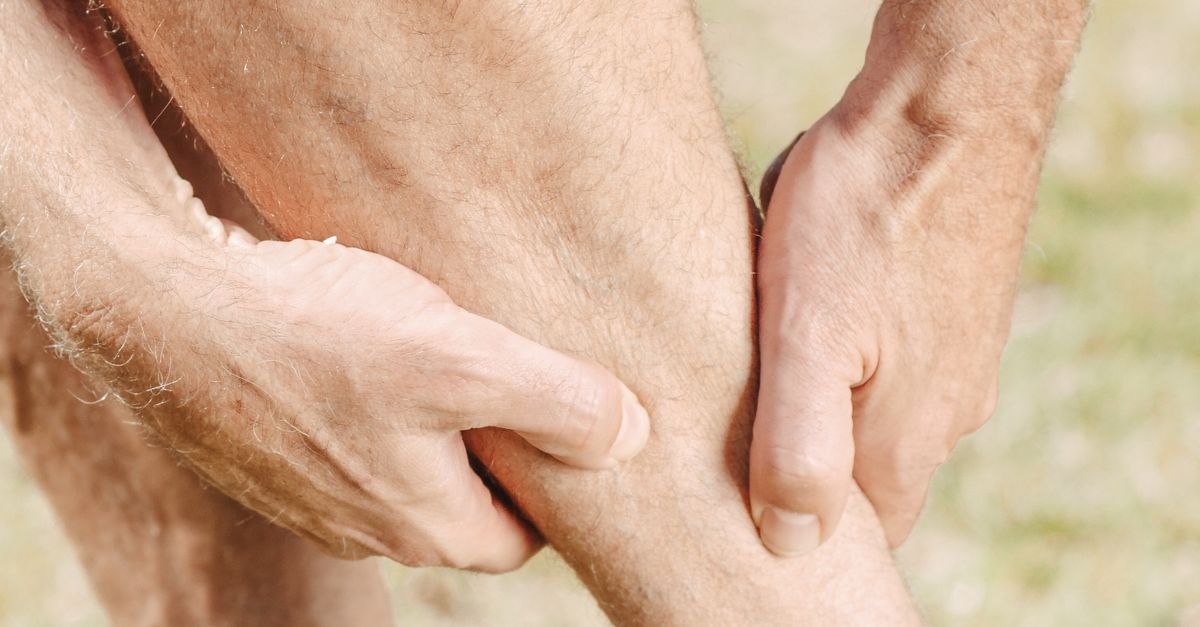
That deep, achy soreness that shows up a day or two after a hard workout (not during it, but afterwards, often peaking on day two) has a name (delayed onset muscle soreness, or DOMS) and a well-established cause that has nothing to do with the substance most people still blame it on.
It’s not lactic acid: here’s what actually happens
The lactic-acid explanation for muscle soreness is one of the most persistent myths in fitness, and it’s simply not supported by the timeline. Lactic acid produced during intense exercise is cleared from the muscle within roughly an hour of finishing, long before DOMS symptoms even begin to appear, let alone peak. Researchers are in broad agreement that lactic acid isn’t involved in the pain of delayed muscle soreness at all.
What actually happens is mechanical: DOMS is understood to result primarily from eccentric contractions (the lengthening phase of a muscle contraction, like lowering a weight slowly or running downhill), which places disproportionate strain on muscle fibres compared with the shortening (concentric) phase. This causes microscopic disruption to the muscle cell structure, particularly in unfamiliar or unaccustomed movements. That structural damage triggers an inflammatory response: immune cells and inflammatory chemicals are drawn to the site, and it’s this inflammatory cascade, not lactic acid and not the initial damage itself, that’s believed to stimulate the pain-sensing nerve fibres responsible for the soreness you actually feel.
Why it’s delayed, and why it’s actually a good sign
The “delayed” part of DOMS reflects the time this inflammatory and repair process takes to build up: soreness typically isn’t felt during or immediately after exercise, begins to develop within the first 24 hours, peaks somewhere between 24 and 72 hours afterward, and generally resolves within about a week.
Rather than being a sign of harm, this process is part of how muscle adapts to a new stimulus. After a bout of unaccustomed eccentric exercise, the muscle undergoes rapid adaptation specifically to reduce the amount of damage (and therefore soreness) the next time it faces the same stimulus. This is sometimes called the “repeated bout effect,” and it’s a large part of why your first heavy leg day of a new programme leaves you far sorer than the same session does a few weeks later, even at similar intensity.
What the evidence actually supports for relief
Given the genuine uncertainty around DOMS’s exact mechanisms, it’s not surprising that a wide range of treatments have been tried, with mixed evidence quality. A few, however, have reasonably solid support:
Massage has some of the better evidence behind it. A systematic review and meta-analysis pooling 11 randomised controlled trials and over 500 participants found massage significantly alleviated DOMS symptoms after strenuous exercise, along with some benefit to markers of muscle damage. The exact mechanism isn’t fully settled, but proposed explanations include reduced inflammatory cytokine levels and improved blood flow to the affected area.
Omega-3 fatty acid supplementation has shown a measurable, if modest, effect in trial evidence. A meta-analysis of 12 randomised controlled trials found omega-3 supplementation significantly reduced DOMS measured two days after eccentric exercise, though it didn’t show a significant effect on restoring muscle strength or range of motion specifically, suggesting it may ease the sensation of soreness without necessarily speeding functional recovery.
Light, active movement, as opposed to complete rest, is commonly recommended and generally well tolerated, on the reasoning that gentle movement supports blood flow to the affected muscles without adding a new significant damage stimulus, though the evidence for this specifically speeding recovery is less robust than for massage or omega-3s.
Treatments with weaker or more inconsistent evidence include anti-inflammatory medication (one trial specifically testing an NSAID found it failed to reduce muscle enzyme leakage or soreness), and various physical therapy modalities like specific heat or cold applications, where systematic reviews have found the accumulated evidence contradictory and often outdated.
The honest takeaway
DOMS isn’t caused by lactic acid buildup. It’s a mechanical and inflammatory response to genuine, if microscopic, muscle damage, mostly from eccentric contractions, and it’s a normal part of how muscle adapts to become more resilient. Of the treatments people commonly reach for, massage has the most consistent supporting evidence, with omega-3 supplementation showing a modest, real effect on soreness specifically. There’s no need to fear soreness itself: it’s evidence your muscles are adapting, not evidence of harm.
Keep reading: Two related questions are covered in does stretching before exercise prevent injury? and cold showers and cold plunges: what the evidence supports.
FAQs
Is DOMS caused by lactic acid buildup?
No, this is a persistent myth. Lactic acid clears from the muscle within about an hour of exercise, long before DOMS symptoms even begin. The soreness is caused by microscopic muscle fibre damage and the subsequent inflammatory response.
When does DOMS typically peak, and how long does it last?
Soreness usually begins within 24 hours of exercise, peaks between 24 and 72 hours afterward, and resolves within about a week.
Does DOMS mean I did something wrong or damaged my muscles too much?
No, DOMS reflects a normal adaptive process. Muscles rapidly adjust after unaccustomed eccentric exercise specifically to reduce damage (and soreness) from similar exercise in future, known as the “repeated bout effect.”
Does massage actually help with muscle soreness?
Yes, reasonably well-supported: a meta-analysis of 11 trials with over 500 participants found massage significantly reduced DOMS symptoms after strenuous exercise.
Should I take anti-inflammatory medication for muscle soreness?
The evidence doesn’t strongly support this. At least one trial specifically testing an NSAID found it didn’t reduce muscle enzyme leakage or soreness, and there’s ongoing debate about whether suppressing the inflammatory response might interfere with the muscle’s adaptive process.
Is it safe to exercise the same muscles again while they’re still sore?
Light, active movement is generally well tolerated and commonly recommended, though very intense training on already-sore muscles without adequate recovery time isn’t well supported and may compound fatigue rather than aid adaptation.