Do you really need eight glasses of water a day?
The 8-glasses rule traces to a misquoted 1945 report: here's what the NHS actually recommends, and what the largest study of human water needs found.
Do you really need eight glasses of water a day?
“Drink eight glasses of water a day” is one of those health rules that feels too universally repeated to question. It turns out to trace back to a single misread sentence from 1945, and the actual UK guidance, and the best modern research on human water needs, both tell a noticeably more flexible story.
Where “eight glasses” actually came from
The most credible origin trace for the 8x8 rule goes back to a 1945 report from the US Food and Nutrition Board of the National Research Council, which stated that “a suitable allowance of water for adults is 2.5 litres daily in most instances”: a figure that works out to roughly eight 8-ounce glasses. The detail that got dropped somewhere in the decades of retelling is the sentence immediately after it: that most of this water is already contained in prepared foods, meaning the original guidance was never intended as an instruction to drink eight additional glasses on top of your normal diet.
In 2002, kidney specialist Heinz Valtin, a physiology textbook author at Dartmouth Medical School, published a review in the American Journal of Physiology specifically investigating whether there was scientific evidence behind the 8x8 rule as commonly understood. He found none: no study directly validating eight glasses of plain water as a requirement for healthy adults, and no clear documented source for exactly how or when the caveat about food-derived water was lost.
What UK guidance actually recommends
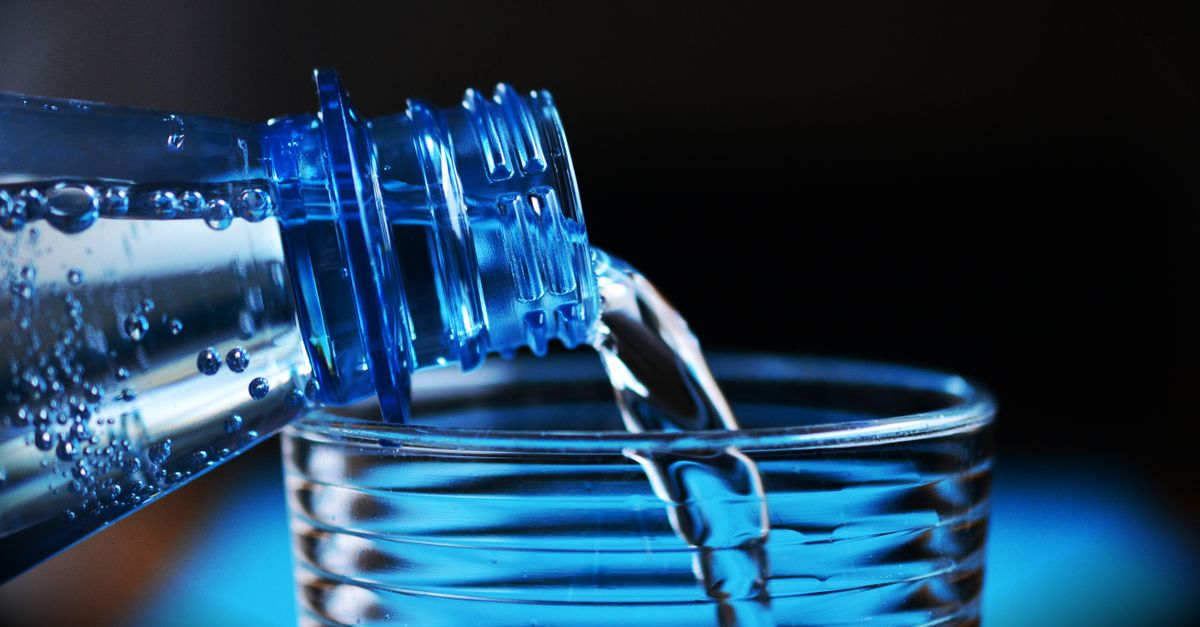
The NHS Eatwell Guide’s actual current advice is to drink 6 to 8 glasses (or cups) of fluid a day, working out to roughly 1.2 to 2 litres, but critically, this figure counts all fluid, not just plain water. Tea, coffee, lower-fat milk and sugar-free drinks all count toward the total, and the NHS explicitly notes you’ll need more during hot weather or exercise. This is a meaningfully different, more flexible piece of guidance than the popular “eight glasses of water, separate from everything else you drink” version that circulates informally: the confusion between “fluid” and “plain water” is arguably where much of the myth’s staying power comes from.
What the best current research actually shows
The most rigorous recent evidence on human water needs comes from a 2022 study published in Science, which used isotope tracing (a precise method for measuring water turnover in the body) across more than 5,600 people in 26 countries. Rather than finding a single universal number, the researchers found daily water turnover varies enormously between individuals, ranging from roughly 1 litre to more than 10 litres a day, driven primarily by body size, physical activity level, climate, and altitude, rather than any fixed age- or sex-based rule.
That finding lines up with what most current health bodies now say explicitly: there’s no single correct number that applies to everyone, and factors like how physically active you are, the climate you’re in, and how much water-rich food (fruit, vegetables, soups) you eat all meaningfully shift your actual need.
So what should you actually go by?
For most healthy adults without a specific medical condition, thirst and urine colour are the practical, evidence-supported ways to judge hydration day to day: the NHS specifically advises aiming for pee that’s a clear, pale yellow colour as a simple daily check, rather than counting exact glasses. If you’re thirsty, drink; if your urine runs consistently dark, you likely need more fluid; if you’re exercising heavily or it’s hot, you’ll need more than the 6–8 glass baseline.
The 6–8 glasses of fluid figure remains a reasonable, evidence-consistent starting point for most people in ordinary UK conditions: it’s just worth knowing it’s a rough guide covering all your drinks combined, not a strict extra quota of plain water on top of everything else you consume.
The honest takeaway
The eight-glasses rule isn’t baseless, but it’s also not the precise scientific mandate it’s often presented as: it’s a rounded, misquoted version of older guidance that always intended to include food and other drinks in the total. Individual water needs vary hugely, and thirst plus urine colour remain more useful everyday guides than any fixed number of glasses.
FAQs
Is the “8 glasses of water a day” rule actually based on science?
Not directly. A formal 2002 scientific review found no study specifically validating eight glasses of plain water as a requirement, and the figure appears to trace back to a misquoted 1945 report that actually included water from food.
What does the NHS actually recommend?
6 to 8 glasses or cups of fluid a day (roughly 1.2–2 litres), but this includes tea, coffee, milk and other drinks, not just plain water.
How do I know if I’m drinking enough?
For most healthy adults, thirst and urine colour are practical everyday indicators: the NHS recommends aiming for a clear, pale yellow colour as a simple guide.
Does everyone need the same amount of water?
No. A large 2022 study using isotope tracing across 26 countries found daily water turnover varies from roughly 1 to more than 10 litres between individuals, driven mainly by body size, activity level and climate.
Do tea and coffee count toward my fluid intake, or do they dehydrate you?
They count. While caffeine has a mild diuretic effect, moderate intake (a few cups a day) doesn’t meaningfully dehydrate you, and the NHS explicitly includes tea and coffee in its fluid guidance.
Do I need more water when I exercise or in hot weather?
Yes: the NHS and other health bodies note fluid needs rise during exercise and hot weather, and general guidance suggests roughly an extra 500ml per hour of exercise as a starting point, adjusted for individual sweat rate and conditions.