Do sleep trackers actually improve your sleep?
Sleep trackers estimate total sleep time reasonably well but are far less reliable on sleep stages, and can create a documented anxiety pattern of their own.
Do sleep trackers actually improve your sleep?
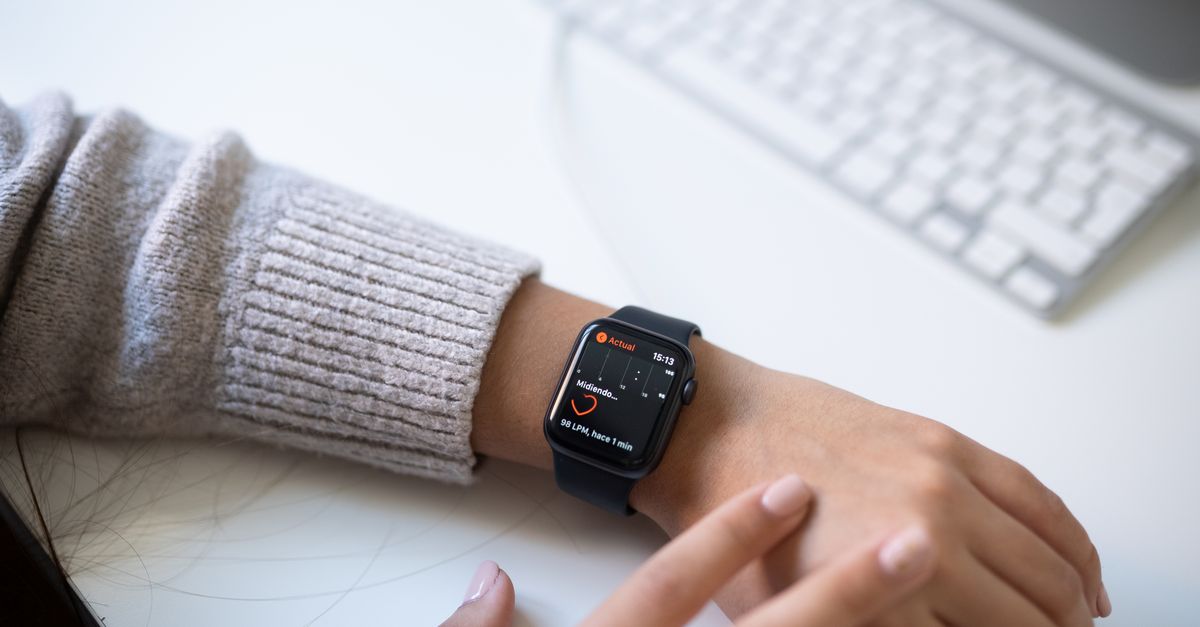
Sleep trackers have become one of the most popular ways people try to understand and improve their sleep: a ring or watch that promises a nightly score, sleep stages, and personalised insights. The research on how accurate these devices actually are, and whether tracking your sleep genuinely helps, tells a more mixed story than the marketing suggests, including a documented downside with a name of its own.
How accurate are they, really?
Consumer sleep trackers typically estimate sleep using a combination of movement sensors (accelerometry) and heart-rate-derived data (photoplethysmography), then use an algorithm to infer sleep stages and quality. The research comparing these estimates against polysomnography (the clinical, EEG-based gold standard conducted in a sleep lab) finds a genuinely mixed picture depending on what’s being measured.
For total sleep time and time in bed, multiple validation studies suggest consumer trackers produce moderately accurate estimates, particularly in healthy adults with typical sleep patterns. Sleep staging is a different story: it’s consistently reported as the least reliable output. A large 2023 multicentre validation study tested 11 popular consumer sleep trackers against polysomnography across thousands of hours of recorded sleep, and found substantial variation in stage-classification accuracy between devices, with performance also shifting depending on individual factors like sleep efficiency and even body mass index. In plain terms: the “you got 1h 47m of deep sleep” figure your app gives you carries meaningfully more uncertainty than the total hours it reports.
Where the errors tend to cluster
Research has also found a consistent pattern in where trackers get things wrong: they tend to overestimate total sleep time and underestimate wake after sleep onset (the time spent lying awake during the night), and this bias is often more pronounced specifically in people with insomnia or fragmented sleep. That’s a meaningful limitation, because these are exactly the people most likely to be using a tracker to try to understand and address a genuine sleep problem, and the device may be systematically underrepresenting how disrupted their sleep actually is.
The documented downside: orthosomnia
Beyond accuracy limitations, researchers have identified a specific negative pattern that can emerge from sleep tracking itself. The term “orthosomnia” (coined by researcher Kelly Baron and colleagues) describes sleep-related anxiety and hypervigilance that develops in response to wearable sleep data, even in people who don’t meet clinical criteria for insomnia. In practice, this can look like becoming preoccupied with a nightly “sleep score,” feeling anxious or frustrated when the numbers look poor regardless of how genuinely rested someone feels, or in some cases the data-checking and worry itself interfering with the ability to fall or stay asleep: the tracker contributing to the very problem it was meant to solve.
The American Academy of Sleep Medicine has formally acknowledged the limitations of consumer sleep technology in a position statement, noting that while these devices can offer some general value, clinicians should be cautious about over-relying on their data for diagnostic purposes, given the accuracy gaps and potential for this kind of data-driven anxiety.
So are sleep trackers worth using?
Given this evidence, a sleep tracker isn’t inherently good or bad: it depends on how you use the data. For general trend-spotting (are you sleeping notably less on weeks with more evening screen time or alcohol, roughly how consistent is your schedule) trackers can offer a reasonably useful, if imprecise, general signal, particularly for total sleep duration. For anything requiring real precision (exact sleep stage breakdown, diagnosing a specific sleep disorder, or treating the nightly score as a precise verdict on your health), the evidence doesn’t support that level of confidence in the numbers.
If you notice yourself checking your sleep score with anxiety, feeling your day is “ruined” by a bad number regardless of how you actually feel, or becoming preoccupied with optimising the data rather than simply sleeping well, that’s worth taking seriously as a sign the tracking itself may be working against you, and reducing or stopping use, or discussing it with a GP if it’s significantly affecting your wellbeing, is a reasonable response.
The honest takeaway
Sleep trackers offer a genuinely useful, if imprecise, general picture of your sleep duration and rough patterns over time, but their sleep-stage data carries considerably more error than most people assume, and the errors cluster worst in the people most likely to be relying on the device to understand a real problem. For some people, the tracking itself becomes a source of anxiety that actively worsens sleep. Treat the numbers as a rough guide, not a verdict.
FAQs
Are sleep trackers as accurate as a sleep study?
No: validation studies comparing consumer trackers against polysomnography (the clinical gold standard) find reasonable accuracy for total sleep time, but considerably less reliable accuracy for sleep stages specifically.
Do sleep trackers work worse for people who already have sleep problems?
There’s evidence for this: research has found trackers tend to overestimate total sleep time and underestimate time spent awake, with this bias often more pronounced in people with insomnia or fragmented sleep.
What is “orthosomnia”?
A term coined by researchers to describe sleep-related anxiety and hypervigilance that can develop from over-attention to wearable sleep data: becoming preoccupied or distressed by tracker scores, sometimes worsening actual sleep as a result.
Should I stop using my sleep tracker?
Not necessarily: for general trend-spotting over time, trackers can offer reasonable value. But if checking your sleep score creates anxiety or you find yourself prioritising the data over how you actually feel, that’s worth addressing.
Which sleep trackers are most accurate?
Research shows meaningful variation between devices and even between different sleep metrics on the same device, so no single tracker is uniformly “most accurate”: devices combining movement and heart-rate data generally outperform older motion-only trackers.
Can a sleep tracker diagnose a sleep disorder like sleep apnoea?
Some newer devices have received limited regulatory clearance for specific features like detecting breathing irregularities, but consumer trackers generally aren’t a substitute for proper clinical evaluation if you suspect a genuine sleep disorder.