Do blood sugar spikes matter if you're not diabetic? What the evidence actually says
Glucose spikes are real and multi-causal, but the evidence that tracking them helps healthy people isn't there yet. Here's what's established versus uncertain.
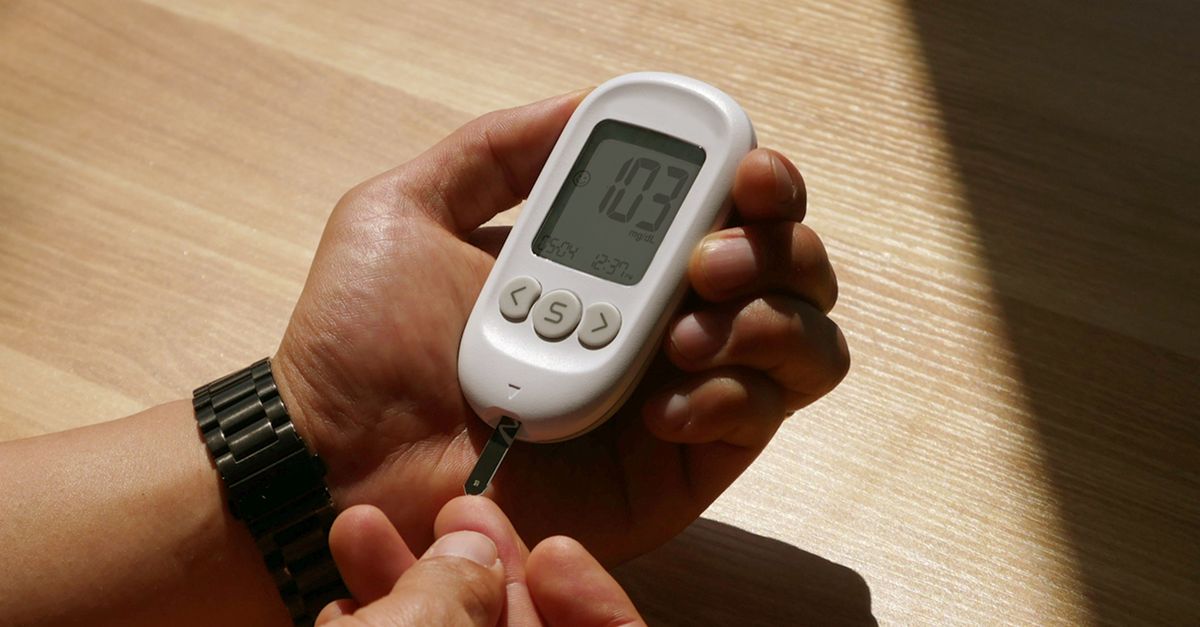
Scroll through health TikTok for five minutes and you’ll likely see someone wearing a continuous glucose monitor (CGM), wincing at a graph spike after white rice, and insisting that “flat lines” are the secret to energy, weight loss and long-term health. It’s a compelling story. But do blood sugar spikes matter if you don’t have diabetes, or is this mostly a wellness trend running ahead of the science?
The honest answer sits in the middle. Glucose spikes are real, measurable, and influenced by far more than what’s on your plate. What’s much less certain is whether monitoring or minimising them changes anything meaningful for someone whose blood sugar already regulates itself normally. This article separates what’s established from what’s still an open question, the trend deserves neither blanket dismissal nor blind trust.
(If you’re specifically after the Jessie Inchauspé “Glucose Goddess” hacks, food order, vinegar, post-meal walks, we’ve fact-checked those individually elsewhere. Here, we’re asking the bigger question underneath the trend.)
What is a blood sugar spike, actually?
A blood sugar spike is simply a rapid rise in blood glucose after eating, followed by a fall back towards baseline, technically called the postprandial glucose response. It happens to everyone, every time they eat carbohydrate, because digestion breaks food down into glucose that enters the bloodstream faster than the body can immediately use it.
In someone without diabetes, this is a normal, self-limiting process, not a malfunction. Glucose typically peaks around an hour after a meal and settles back to baseline within two to three hours. A postprandial reading that stays under roughly 7.8 mmol/L (140 mg/dL) is considered a normal response, well within the range a healthy pancreas handles automatically by releasing insulin.
The size of the spike varies enormously between meals and between people. A meal higher in fibre, protein or fat produces a smaller, slower rise than the same amount of carbohydrate eaten alone, which is the physiological basis for tips like “eat vegetables before carbs.” That part is genuine physiology. Where the trend overreaches is treating every spike as inherently harmful for a healthy person, when a spike, on its own, is simply how digestion works.
It’s not just food: what the CGM-HYPE trial found
One assumption behind glucose-tracking culture is that spikes are mainly a diet problem, fix your food order and your carbs, and the graph flattens. A 2025 exploratory trial, CGM-HYPE, tested this more rigorously than a TikTok demo can.
Researchers fitted ten healthy young adults with continuous glucose monitors and put them through standardised carbohydrate-heavy meals, exercise sessions, and a validated psychological stress test, while tracking glucose and cortisol. Unsurprisingly, a carbohydrate-dense meal (pizza, in this case) produced the largest glucose rise, peaking roughly 40–50 minutes after eating. But food wasn’t the only trigger. Anaerobic exercise, short, intense effort, pushed glucose up noticeably, while steady aerobic exercise kept it flat or falling. Psychological stress alone, with no food involved, also raised both cortisol and glucose measurably.
The takeaway isn’t that food doesn’t matter, it clearly still drives the biggest swings. It’s that a spike on a glucose graph doesn’t automatically mean “you ate badly.” A tough gym session or a stressful meeting can produce a similar-looking curve to a sugary snack. That matters because a lot of glucose-tracking content on social media reflexively blames diet for every spike, when the same monitor, on the same person, would spike for reasons that have nothing to do with what they ate.
Does tracking spikes prevent heart disease if you’re healthy? The evidence is thinner than it looks
This is the question underneath most of the glucose-spike anxiety: even if spikes happen, does keeping them smaller actually protect a healthy person’s long-term health, particularly their heart?
Here the evidence is genuinely underdeveloped, and it’s worth being direct about that rather than picking a side. A 2025 systematic review looked specifically at CGM use for cardiovascular prevention in people without diabetes. Its conclusion wasn’t reassuring for either camp: data in this population are scarce, and the effect of CGM-guided lifestyle changes on actual cardiovascular outcomes remains uncertain. In plainer terms, nobody has yet shown that a healthy person watching their glucose graph and smoothing out spikes ends up with fewer heart attacks, strokes, or better long-term markers than someone who doesn’t bother.
That’s not the same as saying spikes are irrelevant, plausible biological mechanisms (oxidative stress, blood vessel lining effects) exist and are studied in people with diabetes. It’s that, for someone with normal glucose regulation, the leap from “smaller spike on a graph” to “meaningfully lower cardiovascular risk” hasn’t been demonstrated by good-quality trials. Confident claims in either direction, “spikes will damage your arteries” or “spikes are totally meaningless if you’re healthy”, currently outpace what the research supports.
Where the science IS settled: diabetes and prediabetes are a different story
The picture changes considerably once someone has diabetes or prediabetes, and it’s important not to let the “healthy people, unclear evidence” message bleed into that group.
In people with diagnosed diabetes, postprandial hyperglycaemia and glucose variability are an established, independent cardiovascular risk factor, separate from average blood sugar (HbA1c) alone. The proposed mechanism is that glucose swings trigger oxidative stress and endothelial (blood vessel lining) dysfunction more sharply than steady high glucose does, and this relationship has been studied for years, with much larger and more consistent evidence than exists for healthy populations.
This is also why CGM has a genuine, evidence-backed clinical role for people with diabetes, and NHS access is built around that group, real-time or scanning CGM for type 1 diabetes, and for some people with type 2 or gestational diabetes on insulin. Diabetes UK defines prediabetes (medically, “non-diabetic hyperglycaemia”) as an HbA1c of 42–47 mmol/mol, sitting between normal (under 42) and diabetes (48 and above), and people in that range are exactly who postprandial control is most likely to matter for. Neither the NHS nor Diabetes UK currently recommends CGM as a general tool for the healthy public, which lines up with the systematic review’s “evidence is scarce” conclusion above.
FAQs
Is a blood sugar spike after eating bad for you?
Not inherently. A rise in glucose after a meal is a normal digestive response in people without diabetes, as long as it returns to baseline within a couple of hours and doesn’t regularly exceed the normal postprandial range.
What is a blood sugar spike?
It’s a rapid rise in blood glucose after eating (or after exercise or stress), followed by a return towards baseline as insulin moves glucose out of the bloodstream. It happens to everyone who eats carbohydrate.
Do blood sugar spikes matter if you’re not diabetic?
It’s genuinely unclear. Spikes are normal physiology, and good-quality evidence hasn’t yet shown that minimising them changes long-term health outcomes for people with normal glucose regulation, unlike in diabetes, where variability is a recognised risk factor.
What causes blood sugar spikes besides food?
Research on healthy adults has found that intense (anaerobic) exercise and psychological stress can both raise glucose meaningfully, independent of what, or whether, someone has eaten.
Should healthy people wear a continuous glucose monitor?
Current evidence doesn’t support CGM as necessary, or shown to improve outcomes, for people without diabetes. A 2025 systematic review found the cardiovascular-prevention evidence in this group “scarce” and the benefit uncertain.
What’s a normal blood sugar level after a meal?
In people without diabetes, glucose typically peaks around an hour after eating and stays under roughly 7.8 mmol/L (140 mg/dL) before settling back to baseline within two to three hours.
Does eating food in a certain order really reduce glucose spikes?
Meals higher in fibre, protein or fat before carbohydrate do tend to produce a smaller, slower glucose rise than carbohydrate eaten alone, that part has decent physiological grounding, even though its long-term health benefit for healthy people is unproven.
Are glucose spikes linked to heart disease?
In people with diabetes, yes, postprandial hyperglycaemia and glucose variability are established, independent cardiovascular risk factors. In people without diabetes, this link hasn’t been demonstrated with the same strength of evidence.
What’s the difference between a normal spike and prediabetes?
Prediabetes (non-diabetic hyperglycaemia) is diagnosed by blood tests, an HbA1c of 42–47 mmol/mol, not by how dramatic a single post-meal glucose graph looks. A visible spike on a monitor isn’t, on its own, a diagnosis of anything.
Is the “Glucose Goddess” advice backed by evidence?
Some individual tips (food order, post-meal movement) have plausible physiological grounding, though the framing that spikes are broadly dangerous for healthy people overstates the current evidence. We’ve fact-checked her specific hacks in a separate article.
The bottom line
Blood sugar spikes are real, and they’re more complicated than “carbs cause them”, exercise intensity and stress can move your glucose about as much as a meal can, according to controlled research on healthy adults. What’s much less settled is whether a healthy person watching their glucose graph, and working to flatten every spike, is protecting their long-term health in any way that’s actually been demonstrated. A 2025 systematic review found the evidence for CGM-guided cardiovascular prevention in non-diabetics scarce, not proven and not disproven.
That’s a genuinely different situation from diabetes and prediabetes, where glucose variability is an established risk factor and monitoring has a real clinical role. If you’re healthy, a sharp spike after a big carb-heavy meal isn’t a red flag on its own, and if you’re finding a CGM more anxiety-inducing than useful, that’s a reasonable reaction to genuinely uncertain evidence, not a lack of discipline.
This article is general information, not medical advice. If you’re worried about your blood sugar, have symptoms, or have a family history of diabetes, speak to your GP, they can arrange the right tests rather than relying on a graph designed for a different purpose.
Sources
- Non-Invasive CGM in Patients Without Diabetes: Use in Cardiovascular Prevention (Systematic Review), Sensors 2025
- CGM-HYPE study: diet, exercise and stress in healthy young people, PLOS Digital Health 2025
- Diabetes UK: What is prediabetes
- Diabetes UK: Can I get continuous glucose monitoring on the NHS
- Postprandial Hyperglycemia and Glycemic Variability: Should We Care
- Continuous Glucose Profiles in Healthy Subjects under Everyday Life Conditions