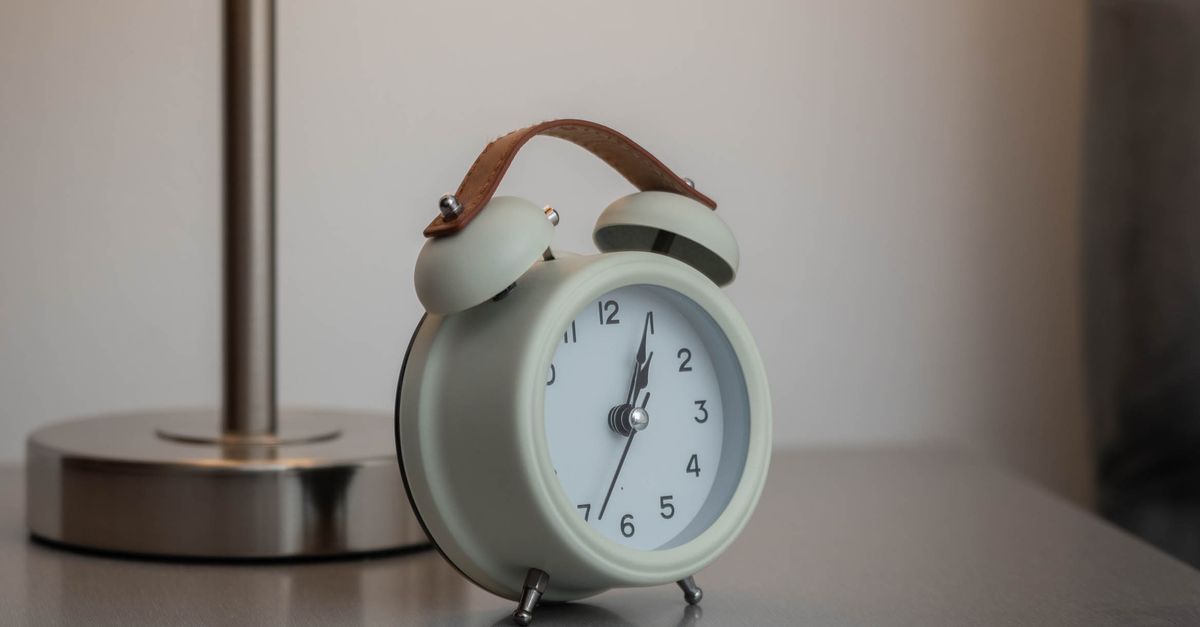
Autumn equinox: how shortening days change your energy
It's not just melatonin's timing that shifts in autumn: research shows its nightly duration actually lengthens, which may explain daytime sluggishness.

Autumn equinox: how shortening days change your energy
There’s a specific reason the autumn equinox tends to coincide with people feeling flatter and more sluggish through the day, not just sleepier at night. It comes down to a hormone most people associate purely with sleep, melatonin, and a lesser-known fact: its nightly window doesn’t just shift, it actually lengthens as the days get shorter, with knock-on effects for daytime energy.
It’s not just when melatonin starts; it’s how long it lasts
Most explanations of “shorter days make you tired” stop at the timing of melatonin release. It starts earlier in the evening as it gets dark sooner. But research into natural seasonal light exposure has found a second, less-discussed effect: the total duration of nightly melatonin secretion itself changes with day length. Studies conducted in northern latitudes with substantial seasonal variation in photoperiod have found nocturnal melatonin secretion runs longer during shorter-daylight months compared with the height of summer: a genuine seasonal adaptation in the underlying biology, not just a shift in the clock.
This matters for daytime energy specifically because a longer melatonin window, especially if morning light exposure is weak (grey autumn mornings, waking before or right around sunrise), can mean melatonin, the signal telling your body it’s still “night”, clears from your system later into the morning than it would in summer. That’s a plausible contributor to the specific flavour of autumn tiredness many people describe: not just wanting to go to bed earlier, but feeling genuinely groggy and slow to properly “switch on” well after waking.
The broader shift in circadian timing
Separate research measuring dim-light melatonin onset (DLMO), considered the most reliable marker of internal circadian timing, directly across seasons has found both the time of year and the pattern of daily light exposure measurably affect when the body’s internal clock starts releasing melatonin for the night. Comparative studies in locations with dramatic seasonal light differences (comparing near-continuous summer daylight against equinox conditions) have documented significantly reduced daylight exposure driving these circadian shifts, reinforcing that it’s specifically the amount and pattern of light your body receives, not the calendar date itself, doing the work.
None of this is unique to any one person; it’s a normal, biologically expected seasonal adaptation. But it plays out differently depending on how much natural light exposure you’re actually getting day to day, which is why two people experiencing the same shortening days can feel quite different levels of autumn sluggishness.
What actually helps
Since the mechanism centres on light exposure and timing, the most consistently supported countermeasure is straightforward: get outside for genuine daylight exposure earlier in the day, ideally within the first hour or two of waking. This helps appropriately suppress melatonin at the right time and gives your circadian system a clear, strong morning signal, which the research suggests is the most effective lever for keeping the melatonin window from drifting later or lasting longer than it needs to.
Practical ways to do this without a major routine overhaul: a short outdoor walk before starting work, having breakfast near a window rather than in a dim room, or simply stepping outside briefly even on a cloudy day (outdoor light remains far brighter than typical indoor lighting, cloud cover included). Consistency matters more than duration: a reliable 10-15 minutes most mornings appears more useful than an occasional longer session.
The honest takeaway
The specific, day-dragging sluggishness that shows up around the autumn equinox isn’t purely about losing sleep: it’s linked to melatonin’s nightly window actually lengthening as daylight shortens, which can leave more of it in your system later into the morning. Getting outside for real daylight earlier in the day is the most well-supported, low-effort way to counter that effect and keep your daytime energy from following the light curve down.
Keep reading: Changes of routine also affect how you feel at this time of year: see the “back to routine” effect.
FAQs
Why do I feel sluggish all day, not just sleepy at bedtime, once autumn sets in?
Research suggests the duration of nightly melatonin secretion lengthens as daylight shortens, not just the timing of when it starts: meaning melatonin may still be present in your system later into the morning, which is a plausible contributor to daytime grogginess beyond simple tiredness.
Is this the same mechanism as jet lag or the clocks changing?
Related but distinct: this is a gradual, natural seasonal shift in melatonin duration and timing driven by day length, rather than an abrupt artificial time change, though both ultimately involve circadian and melatonin disruption.
What’s the most effective way to counter autumn sluggishness?
Getting outdoor daylight exposure earlier in the day, ideally within the first hour or two of waking, is the most consistently recommended step: it helps appropriately suppress melatonin and gives your circadian system a clear morning signal.
Does cloudy weather mean morning light exposure won’t help?
No: outdoor light remains considerably brighter than typical indoor lighting even under cloud cover, so a morning walk still provides meaningfully more circadian signal than staying indoors.
Does this affect everyone equally?
Not necessarily: the effect depends heavily on how much natural daylight exposure someone actually gets day to day, so people with more indoor-bound mornings or later wake times relative to sunrise may notice a stronger effect.
Is it normal for energy, not just sleep, to be affected by shortening days?
Yes: this is a well-documented, biologically expected seasonal pattern connected to melatonin and circadian timing, not a sign of a health problem, though persistent, severe low mood alongside it is worth discussing with a GP.
Sources
- Annual variation in daily light exposure and circadian change of melatonin and cortisol at northern latitude, PMC
- Zerbini et al. (2021) — Weekly, seasonal and chronotype-dependent variation of DLMO, Journal of Pineal Research
- Chronotype-Dependent Changes in Sleep Habits Associated with DLMO, MDPI Clocks & Sleep