Gut health and the rise of functional foods: a beginner's guide
Gut health is everywhere in 2026. A clear beginner's guide to the microbiome, the functional foods that genuinely help, and whether you actually need a probiotic.
Gut health went fully mainstream in 2026 — kefir in every fridge, “psychobiotics” on the shelves, and a lot of confident claims. Some of it is solid science; some is a fermented marketing opportunity. This is a beginner’s guide to what’s actually real, what’s still emerging, and where to start — without buying a cupboard full of supplements you don’t need.
What the gut microbiome actually does
Your gut has trillions of microorganisms living in it — mostly bacteria, but also fungi and viruses — mainly in your large intestine. Collectively they help digest fibre, train your immune system (much of which sits around the gut), and produce compounds that affect the rest of your body. A more diverse microbial community is generally associated with better health.
The important caveat, which the wellness industry tends to skip: a lot of this science is still emerging and mostly associational. We can say a diverse gut is linked to better health; we can’t yet say a particular food or supplement reshapes your microbiome and causes you to be healthier. That doesn’t mean the advice is useless — it means the sensible moves are dietary and low-risk, not expensive and miraculous.
Food first: the “30 plants a week” idea
The single most useful, evidence-aligned habit is plant diversity. The largest citizen-science study of its kind — the American Gut Project (2018) — found that people who ate more than 30 different types of plant a week had more diverse gut microbiomes than those eating 10 or fewer. Interestingly, plant variety mattered more than whether someone was vegan or omnivore.
Two honest caveats: this was an observational finding, not a controlled trial, so “30 plants” is a sensible rule of thumb rather than proven medicine. And “plants” counts broadly — vegetables, fruit, wholegrains, nuts, seeds, pulses, herbs and spices all count — which makes 30 a week far more achievable than it sounds (a mixed salad, a handful of nuts and a few herbs can rack up ten in a day).
Underpinning all of this is fibre. UK guidelines recommend 30g of fibre a day, yet most adults manage only around 20g. Closing that gap feeds the beneficial bacteria that produce anti-inflammatory compounds — which is why fibre, not a probiotic, is the real foundation of gut health.
Fermented foods: the best food-based evidence
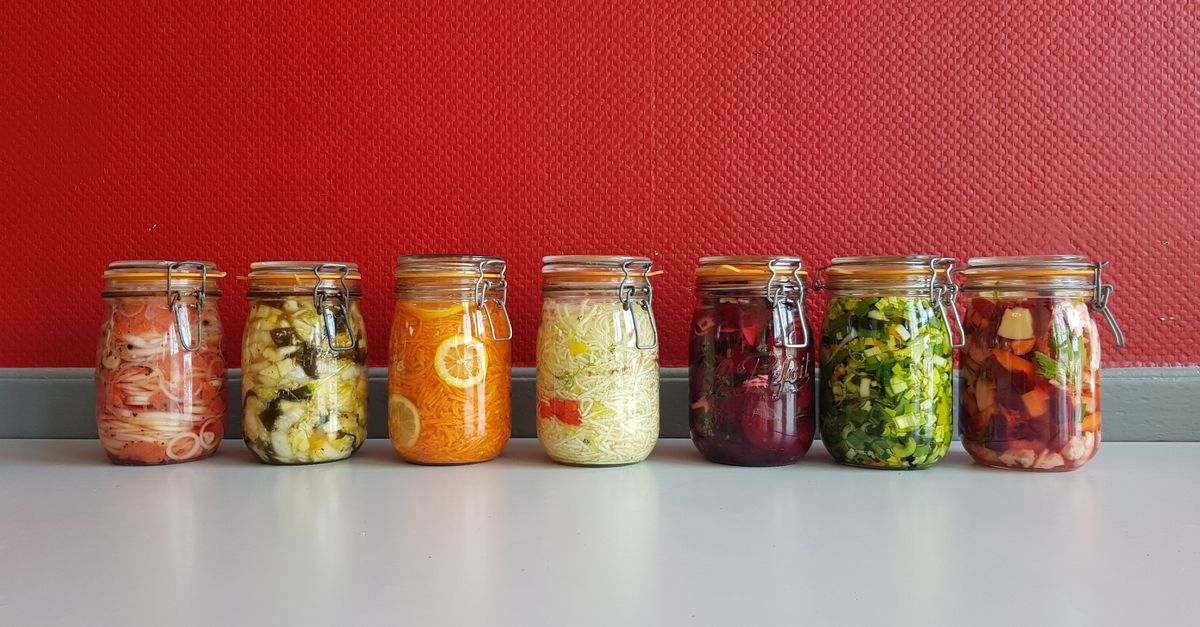
Fermented foods — yoghurt, kefir, sauerkraut, kimchi, kombucha, miso, tempeh — are made through controlled microbial growth, and they’re where some of the most interesting recent evidence sits. In a 2021 Stanford trial published in Cell, 36 healthy adults spent 10 weeks on a diet high in either fermented foods or high-fibre foods. The fermented-food group saw their gut microbial diversity increase and showed a drop in 19 inflammatory markers, including one (interleukin-6) tied to chronic inflammation.
It’s a genuinely promising result — but keep it in proportion: it was a single, small, short study in healthy people, and the fibre arm may simply have needed longer to show effects. The takeaway isn’t “fibre doesn’t matter” (it very much does); it’s that adding a daily serving of fermented food alongside your plants is a reasonable, evidence-backed move. Start small — a spoon of live yoghurt or a forkful of kimchi — and build up.
Do you need a probiotic?
Usually not. The NHS’s position is that while probiotics may help in specific situations, there’s little evidence for most broad health claims — and for healthy people, a probiotic supplement is unlikely to be beneficial. Where they do help, the benefit is strain- and condition-specific: the clearest evidence is for reducing antibiotic-associated diarrhoea, and for easing some symptoms of conditions like IBS. “Probiotics” isn’t one thing, and a product proven for one use tells you nothing about unrelated “immunity” or “energy” claims.
Multi-strain probiotic
£22A reasonable choice for a short course after antibiotics or a sensitive gut — not a daily essential for most people.
- Multiple researched strains
- sensible CFU count
- handy after antibiotics
For most of us, the missing piece is fibre, not bacteria. It’s worth knowing the difference: probiotics are live microbes, while prebiotics are the fibres (like inulin) that feed the bacteria you already have. If your diet is low on plants, a simple fibre supplement is an easy, well-evidenced bridge while you build the habit.
Psyllium husk fibre
£12The unglamorous winner: stir into water or yoghurt to help close the fibre gap most of us have.
- Soluble fibre that feeds good microbes
- supports regularity
- cheap
The marketing to be sceptical of
Where gut health gets murky is the products. A few worth a raised eyebrow:
- Kombucha and “gut-friendly” drinks: the human evidence for kombucha’s health claims is very limited — most comes from animal studies. It’s a pleasant drink, not a proven tonic.
- “Detox”, “cleanse” and “reset your gut in 7 days”: there’s no evidence you can detox or reset your microbiome on a fixed timeline; your liver and kidneys handle detoxification, and diet shifts the gut gradually and individually.
- “Leaky gut syndrome”: increased intestinal permeability is a real phenomenon under study, but the marketed “syndrome” treated by supplements isn’t an established diagnosis.
- The gut-brain axis: genuinely fascinating and actively researched, but current human evidence is mostly correlational — “fix your gut to fix your mood” runs well ahead of the science.
UK advertising rules (ASA/CAP) tightly control health claims on food, which is why the boldest gut-health promises tend to live in the small print.
A note on IBS — and when to see a GP
General gut-health advice isn’t one-size-fits-all. For some people with irritable bowel syndrome (IBS), fermented and high-fibre foods can worsen bloating and wind, because they ferment in the gut and produce gas. If that’s you, a dietitian-guided approach (such as a low-FODMAP plan) is more useful than blanket “eat more sauerkraut.” And any persistent change in bowel habit, blood in your stool, or unexplained weight loss is a reason to see your GP, not something to self-treat with supplements.
Frequently asked questions
What is gut health? It refers to the balance and diversity of the trillions of microbes in your gut; a diverse microbiome is linked to better health, though much of the science is still emerging.
How can I improve my gut health naturally? Eat a wide variety of plants, get enough fibre, include some fermented foods, cut down on ultra-processed foods, and increase fibre gradually with plenty of fluid.
Is “30 plants a week” actually backed by science? It comes from the American Gut Project (2018), which linked eating 30+ plant types a week to a more diverse microbiome — a useful rule of thumb, though the data is associational rather than proof.
Do fermented foods really help your gut? A 2021 Stanford trial found a 10-week high-fermented-food diet increased microbial diversity and lowered inflammatory markers — promising, but a single small study.
Do I need to take a probiotic supplement? The NHS says healthy people are unlikely to benefit; probiotics have strain- and condition-specific uses (like after antibiotics) but not for broad health claims.
What’s the difference between prebiotics and probiotics? Probiotics are live beneficial microbes; prebiotics are fibres (like inulin) that feed the bacteria you already have.
Is kombucha good for you? There’s very little human evidence for kombucha’s health claims — most comes from animal studies — so the marketing outpaces the science.
Can gut health affect your mood? The gut-brain axis is real and being studied, but the human evidence is mostly correlational, so strong claims aren’t justified yet.
Can gut-health foods make IBS worse? Yes — for some people with IBS, fermented and high-FODMAP foods trigger gas and bloating, so a dietitian-guided approach may help.
How much fibre should I eat a day? UK guidelines recommend 30g a day, though most adults eat only around 20g.
The bottom line
Gut health is real, but it’s won at the dinner table, not the supplement shelf. Eat a wide range of plants — aim for around 30 different types a week — add some fermented foods, get enough fibre, and treat probiotics as a targeted tool rather than daily insurance. Be sceptical of anything promising to “detox” or “reset” your gut on a timeline.
This is general information, not medical advice — if you have persistent digestive symptoms or a diagnosed condition like IBS, speak to your GP or a registered dietitian about what’s right for you.
Sources
- McDonald et al., mSystems (2018) — American Gut Project (plant diversity and the microbiome)
- Wastyk et al., Cell (2021) — Fermented-food diet increases microbiome diversity, lowers inflammation (Stanford)
- NHS — Probiotics
- British Dietetic Association — Probiotics and gut health
- NHS — How to get more fibre into your diet